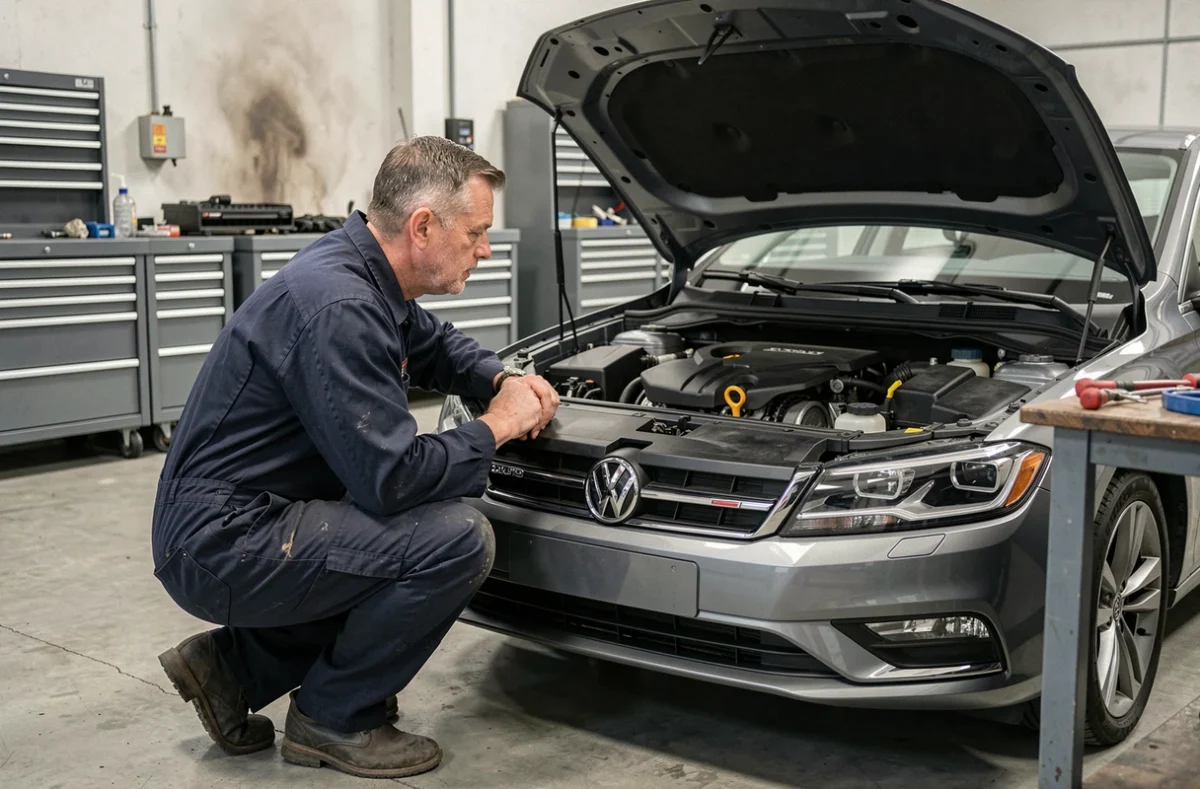
The share of diesel in new registrations in France is declining sharply year after year. This drop is not just a passing trend: it reflects an industrial withdrawal by the manufacturers themselves, who are eliminating their diesel versions with each model refresh.
The question of the future of diesel is therefore less about user preference and more about actual availability in the market.
Euro 7 Standard and CO2 Target 2035: What the Texts Really Provide
The European regulatory framework sets a 100% reduction in average CO2 emissions from new cars by 2035. This effectively excludes conventional thermal engines from the new market, including diesel. A proposal from the Commission to relax this target is under discussion, but it has not been adopted.
This nuance is crucial: European law does not provide for the withdrawal of diesels already in circulation. The ban applies to the sale of new vehicles, not to the use of existing vehicles. A diesel registered in 2025 will be able to continue to operate after 2035, provided it complies with local restrictions related to low emission zones (ZFE).
The final text regarding the 2035 deadline is still under negotiation. Betting on a relaxation to justify a new diesel purchase today is more of a regulatory gamble than a rational calculation. To delve deeper into projections for this engine type, it is useful to read the article from Ma Future Voiture which details medium-term scenarios.

ZFE and Crit’Air Sticker: Variable Diesel Restrictions
Low emission zones do not operate as a uniform national ban. Restrictions vary by metropolitan area, the Crit’Air classification of the vehicle, and local regulations. In Paris and Lyon, the minimum restrictions target Crit’Air 3 cars and above, which includes diesels registered before 2011.
A recent diesel (Euro 6d, Crit’Air 2) currently retains access to almost all French ZFEs. The problem is prospective: restriction schedules are advancing, and a Crit’Air 2 vehicle could find itself excluded from certain metropolitan areas in a few years.
Local authorities set their own traffic rules in ZFEs. The actual access of a diesel to a city depends on three parameters:
- The Crit’Air classification of the vehicle, linked to its registration date and Euro standard
- The metropolitan area concerned and the restriction schedule it has adopted
- Any temporary or permanent exemptions (classic vehicles, professional vehicles)
For a driver exclusively in suburban or rural areas, these restrictions have no immediate impact. For a driver who regularly enters a large metropolitan area, the accelerated depreciation of a diesel excluded from ZFE weighs as much as the fuel price.
Used Diesel: The Segment Where the Calculation Remains Favorable
The new market is gradually closing to diesel, but the rolling stock remains predominantly diesel in France. It is in the used market that this engine type retains real economic relevance, provided the right usage profile is targeted.
The high torque at low revs and reduced consumption on the highway remain technical advantages that neither gasoline nor non-rechargeable hybrids can match on long journeys. A driver who covers many kilometers each year, mainly on roads and highways, gets the best out of this engine type.
The calculation shifts for urban or mixed profiles with low mileage. The additional maintenance costs specific to diesel (particulate filter, AdBlue, EGR valve) negate the advantage at the pump below a certain mileage threshold. The criteria to check before purchasing a used diesel:
- The expected annual mileage: the higher it is, the more competitive diesel remains compared to gasoline
- The Crit’Air classification of the targeted model, which conditions future access to city centers
- The condition of the pollution control system (DPF, SCR), whose replacement represents a high cost
- The estimated resale value in five years, which is sharply declining for older diesels
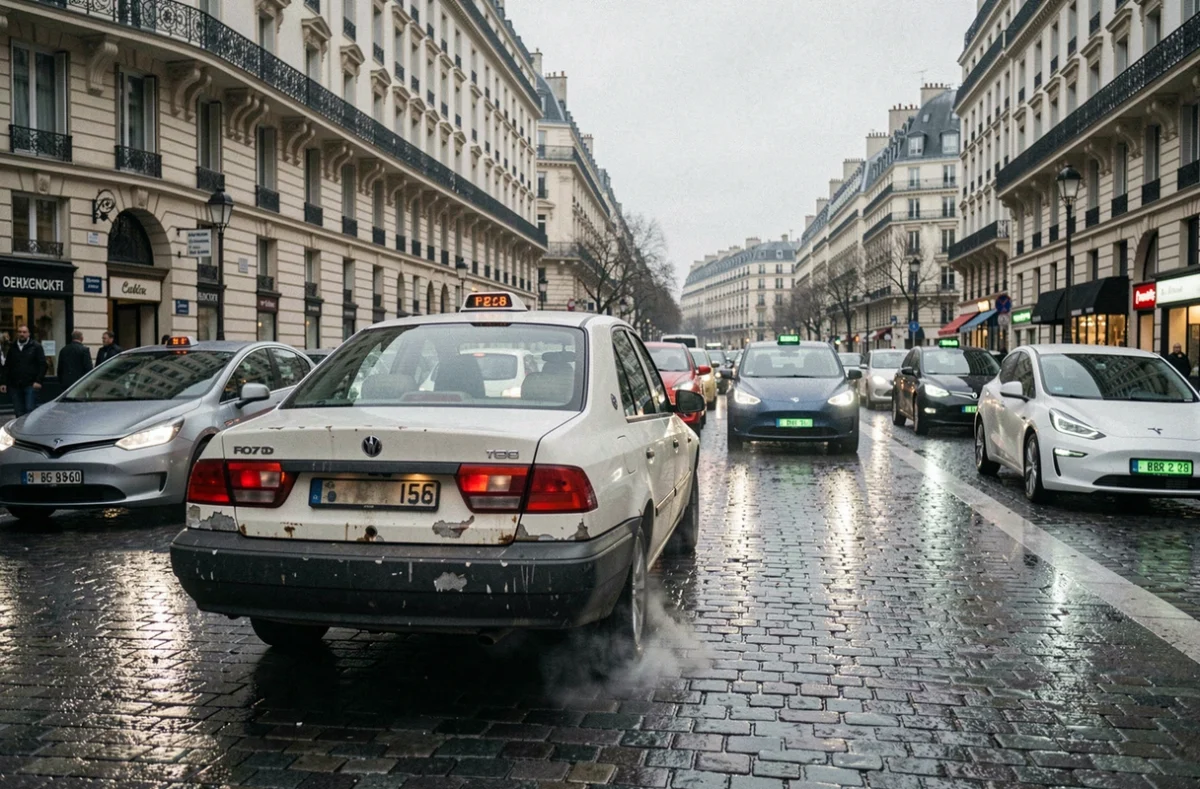
HVO100 Biofuels and E-fuels: False Revival or Sustainable Niche
HVO100, a synthetic fuel produced from hydrotreated vegetable oils, is sometimes presented as a lifeline for diesel. Compatible with most recent diesel engines without modification, it significantly reduces particulate and CO2 emissions over its life cycle compared to fossil diesel.
Its availability remains marginal in France. The distribution network is embryonic, and the price per liter exceeds that of conventional diesel. E-fuels (synthetic fuels produced from hydrogen and captured CO2) are even further from mass commercialization.
These sectors could theoretically allow diesel engines to meet future emission standards, but their scaling up depends on massive industrial investments and a still non-existent fiscal framework. As it stands, HVO100 does not change the purchasing equation for an individual.
Diesel is not dead, but its relevance is shrinking year after year. It remains a defensible choice for high-mileage rural or highway drivers who buy relatively recent used vehicles, with a Crit’Air 1 or 2. For all other profiles, hybrid and electric alternatives now offer comparable or lower total ownership costs, without the growing regulatory risk that weighs on the residual value of diesel vehicles.