You are planning a tattoo and want to know how much to budget before stepping into a studio. The cost of a tattoo depends on several variables that add up, and the size of the design is just one of them. Understanding these variables allows you to compare quotes without unpleasant surprises and to communicate more effectively with the tattoo artist.
What the minimum rate of a tattoo studio really covers
Before even discussing size or body area, one point deserves to be understood: most studios apply a minimum fee per session. This amount does not reflect the duration of the tattooing. It covers the preparation of the workstation, the opening of sterile single-use materials, cleaning, and administrative time.
A tiny design of a few centimeters will therefore never cost “almost nothing.” The minimum session fee even exists for a tiny tattoo. Many tattoo artists work on a flat rate rather than by the hour, which changes the calculation logic for small projects.
If you want to estimate the price of a tattoo, corpsenfolie.com offers a tool that crosses size and body area to provide an initial indicative range.
Price of a tattoo by size: concrete tiers
Size remains the most intuitive criterion. A larger design requires more time, more concentration, and more materials. Here are the price tiers that are consistently found in data from French studios:
- Small tattoo (about 3 to 5 cm): generally expect between 50 and 120 euros, often charged at a flat rate since the session lasts less than an hour.
- Medium tattoo (10 to 15 cm): the range is typically between 150 and 300 euros, depending on the level of detail.
- Large piece (full arm, back, thigh): the budget rises to several hundred euros, even several thousand for a project over multiple sessions.
Two tattoos of the same size can have very different prices. A clean geometric design with simple lines is completed faster than a botanical composition filled with textures and shading. The level of detail weighs as much as the covered area.
Body area and pricing: why location changes the price
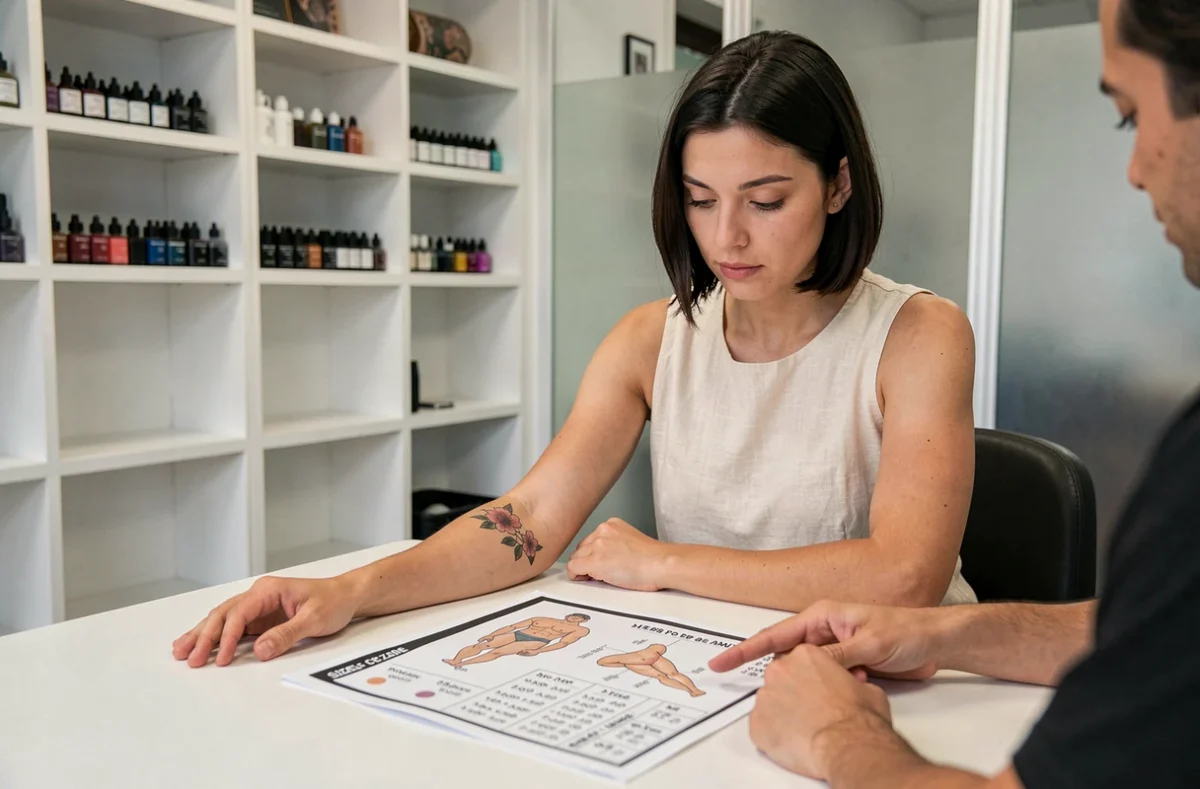
Have you noticed that some parts of the body are more sensitive than others? This sensitivity has a direct impact on the tattoo artist’s work, and therefore on the price.
Stable areas versus mobile areas
The forearm, calf, or upper arm offer a relatively flat and stable surface. The skin there is firm, which makes the needle work easier. Stable areas allow for faster and more consistent tattooing.
In contrast, the abdomen, ribs, or inside of the elbow present specific constraints. The skin of the abdomen folds with movement and changes shape with bodily variations. The tattoo artist must adapt the placement and sometimes the composition of the design to ensure the result remains consistent in all postures.
Painful areas and session time
On the ribs, feet, or fingers, the pain often necessitates more frequent breaks. These interruptions extend the session without increasing the tattooed surface. A longer session on a sensitive area costs more for the same amount of tattooing time.
The hands and fingers pose another problem: the skin there holds ink less effectively. Touch-ups are often necessary, which adds an additional session to the total budget.
Preparatory drawing and touch-ups: the overlooked items in the calculation
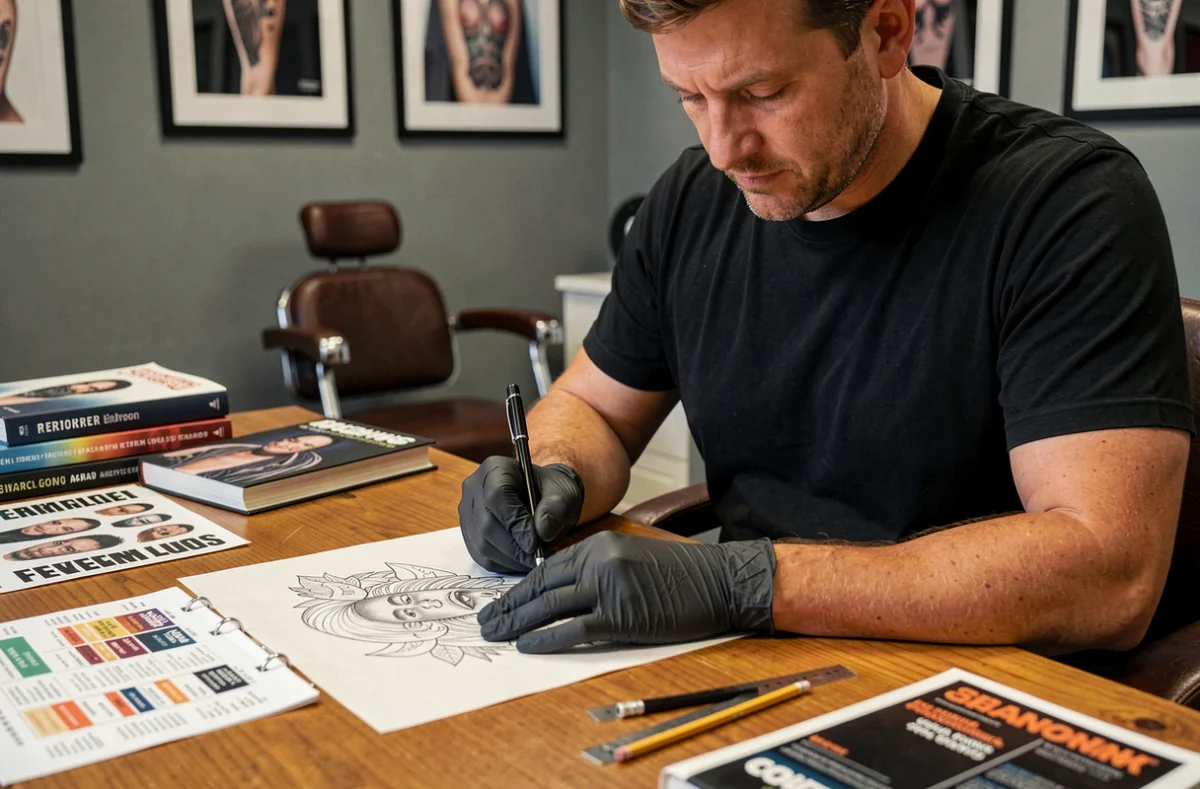
When comparing two quotes, check what is included. The preparatory drawing (or custom “flash”) sometimes represents several hours of work beforehand. Some studios charge for it separately, while others include it in the overall package.
Touch-ups after healing are not always included in the initial price. Some artists offer a touch-up in the weeks following the session, while others charge it as a new service. Asking the question before signing the quote avoids unexpected costs.
The “invisible” working time doesn’t stop there. French health regulations require prior information on risks, the provision of written instructions, and post-session follow-up. This regulatory framework contributes to the operating cost of the studio.
Tattoo budget: how to build a realistic estimate
Rather than looking for a fixed price, build your estimate by crossing three parameters:
- The surface area of the design and its level of detail, which determine the tattooing time.
- The chosen body area, which influences the technical difficulty and actual duration of the session.
- Additional services (custom drawing, touch-up included or not, number of sessions planned).
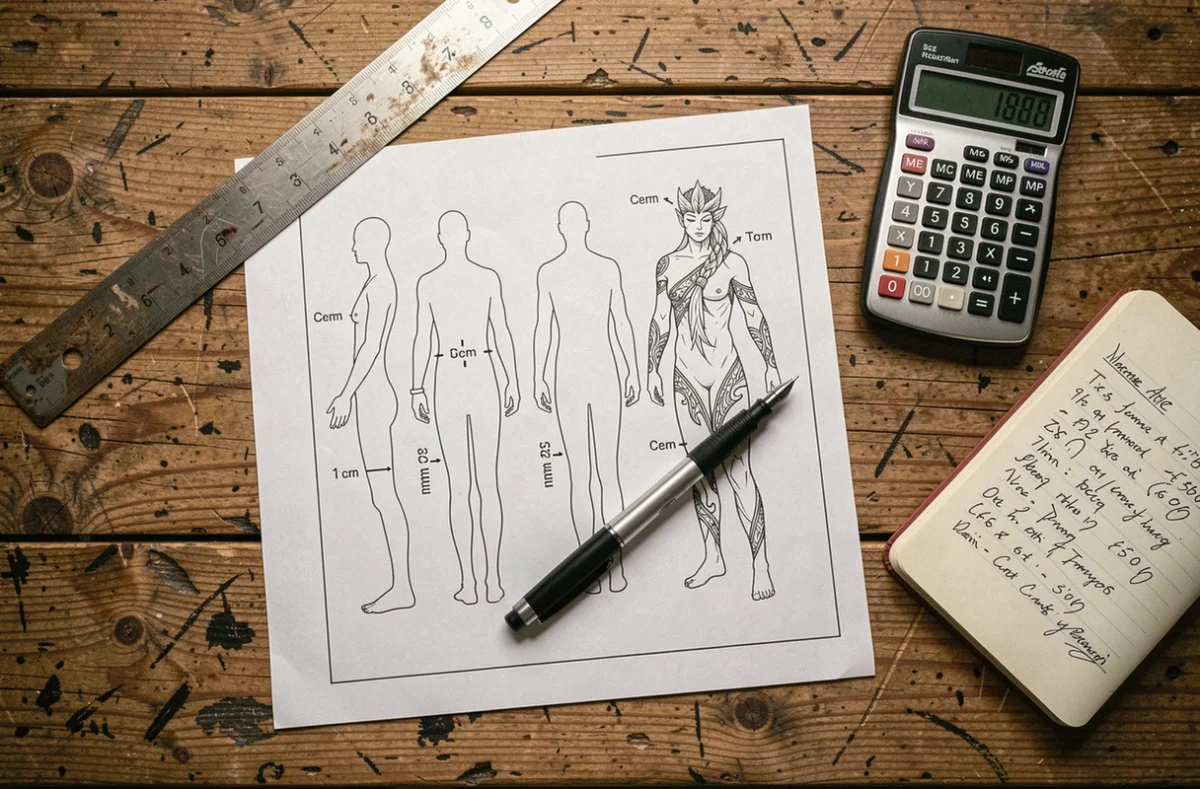
The best estimate remains the one provided by a tattoo artist after seeing your project. Online calculators and price ranges serve to frame a budget, not to replace a discussion with the artist. Send a precise description (desired size, body area, visual style references) and request a detailed quote that distinguishes each item. This is the only way to obtain a reliable figure.