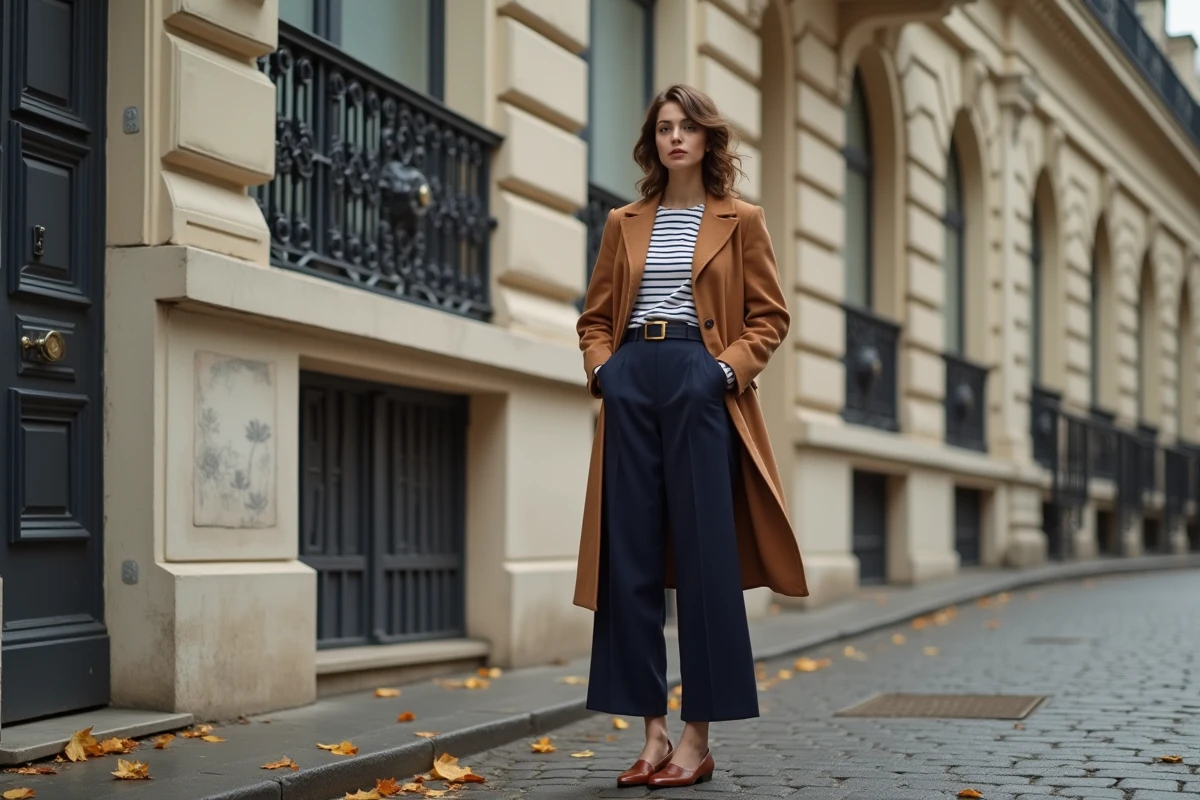
This season’s Parisian fashion trends are less about spectacular pieces and more about the details of cut, texture, and construction. Between the return of pragmatic elegance on the runways and the rise of hybrid looks observed on the streets, Paris is redefining what makes a garment desirable. What discrepancies emerge between the designers’ proposals and what Parisians actually wear in their daily lives?
Materials and textures at the center of Parisian style this season
The reports from Paris Fashion Week published by L’Officiel in March 2026 point to a clear shift: material effects take precedence over color codes. Textural layers, intricate finishes, and plays of transparency replace flashy prints as markers of sophistication.
This shift has a direct consequence on the choice of pieces. A ribbed knit dress worn over a fine turtleneck, a boiled wool blazer paired with fluid satin trousers: Parisian designers offer combinations where each layer brings a different textile information. The visual interest arises from the contrast between matte and shiny surfaces, between rigidity and flexibility.
The trends spotted on the Mode in Paris website confirm that this approach extends well beyond the runways, reaching the displays of boutiques in the Marais and the selections of Parisian concept stores.
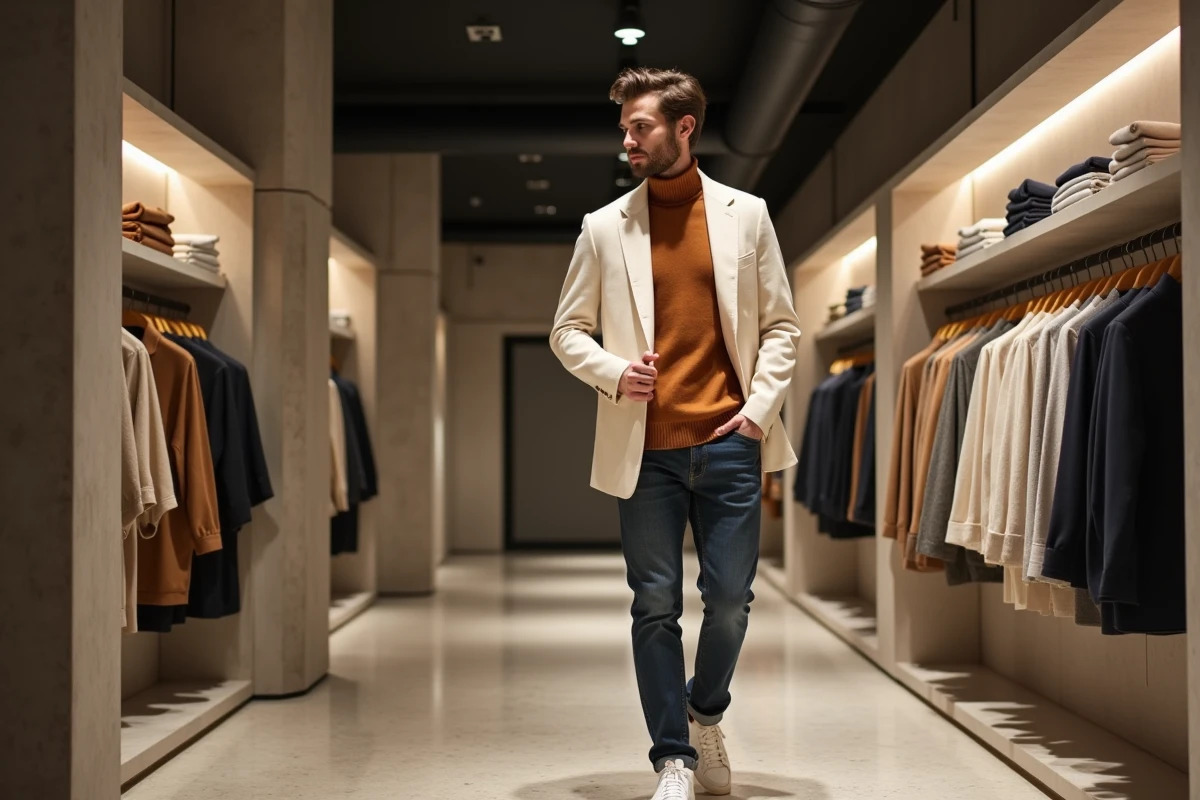
Runways vs street style: a summary of discrepancies between shows and Parisian looks
Fashion Week remains the laboratory, but Parisian street style filters and reformulates the proposals from fashion houses. Cosmopolitan France noted as early as October 2025 the rise of hybrid looks between tailoring and casual pieces. The table below summarizes the main discrepancies observed this season.
| Aspect | On the runways | In the streets of Paris |
|---|---|---|
| Silhouette | Sharp cuts, structured shoulders, clean lines | Mix of tailoring and sportswear, suit jacket over sneakers |
| Materials | Textural layers, experimental finishes | Technical materials worn with classic pieces |
| Colors | Dull palettes, dominant neutral tones | Omnipresent black, highlighted by a single colorful accessory |
| Key pieces | Architectural dress, sculptural coat | Reinterpreted trench, wide trousers, chunky loafers |
| Accessories | Compact bags, discreet jewelry | Functional medium bags, oversized sunglasses |
The runway proposes, the street disposes: Parisian women retain the structure and attention to detail but discard what complicates daily life. The XXL bag seen at some houses transforms into a practical intermediate size. The sculptural dress becomes a blazer worn open over straight jeans.
Pragmatic elegance: what this fashion trend concretely changes
L’Officiel describes the direction taken by Parisian designers this season as pragmatic elegance. The term summarizes a fundamental shift: the silhouettes are more wearable, the cuts sharper, the sophistication more discreet.
In practice, this translates into several recurring choices in the collections presented in Paris:
- Pieces designed to function alone or in layers, without requiring complex styling
- Cuts that hold their promise beyond the runway, with comfortable armholes and hems suitable for walking
- A focus on closures, pockets, and linings that brings ready-to-wear closer to technical wardrobes
- A limited color palette that facilitates combinations between pieces from different designers
This pragmatic turn is not a simplification. Parisian designers concentrate their creativity on the internal construction of the garment rather than on immediate visual impact. Luxury shifts towards what is not visible at first glance: the quality of stitching, the drape of a fabric, the precision of a cut.
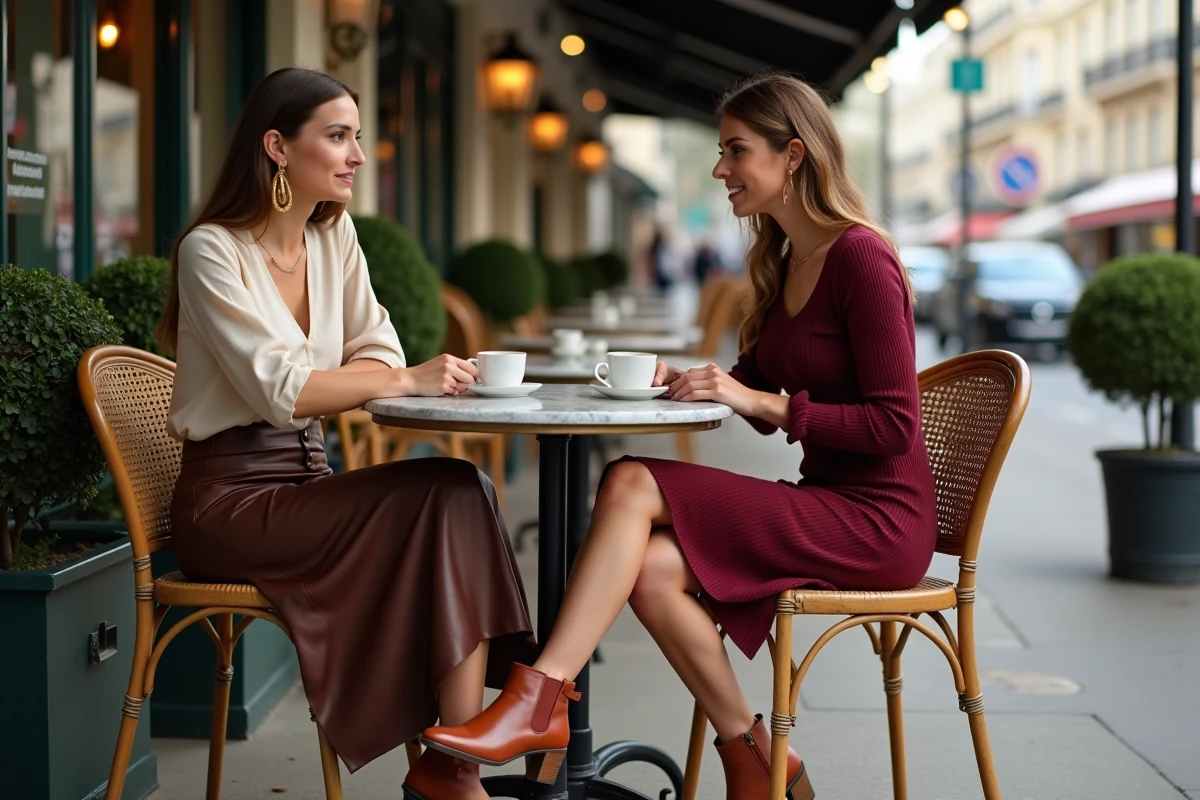
Hybrid tailoring, the Parisian signature of spring
The blend of tailoring pieces and sports-inspired clothing is the most visible trend on the streets of Paris. A flannel suit worn with technical sneakers, a tailored jacket over cargo pants: hybrid tailoring blurs the line between formal and casual.
This hybridization does not yield the same results depending on how it is executed. The most successful looks share a common point: the coherence of proportions. A fitted top with wide bottoms, or vice versa, but never two identical volumes layered together.
Parisian designers and pieces to watch for the end of the season
The dissemination of Parisian trends follows a well-established cycle. What appears on the runways of Fashion Week in March is found in boutiques between April and June, and then in mainstream stores at the start of the school year. The most copied pieces this season are those that combine structure and comfort: short trench, chunky-soled loafers, pleated trousers in technical fabric.
The designers who made the most impact in Paris this season are not necessarily the most media-savvy. Several young houses presented collections where textile work took precedence over logos, a sign that the Parisian market increasingly values discreet craftsmanship.
What distinguishes Parisian looks from the rest of European fashion
Paris shares some codes with Milan or London, particularly the taste for tailoring. However, Parisian fashion is distinguished by its rejection of the total look. While other capitals embrace monoblock silhouettes, Parisian women prefer to break up an outfit with an unexpected detail: a contrasting shoe, an antique piece of jewelry with a contemporary outfit, a vintage bag worn with new clothes.
This reflex of controlled mismatching remains the guiding thread of the season. Trends come and go, but this Parisian grammar of style endures and continues to inspire the collections presented at each fashion week.