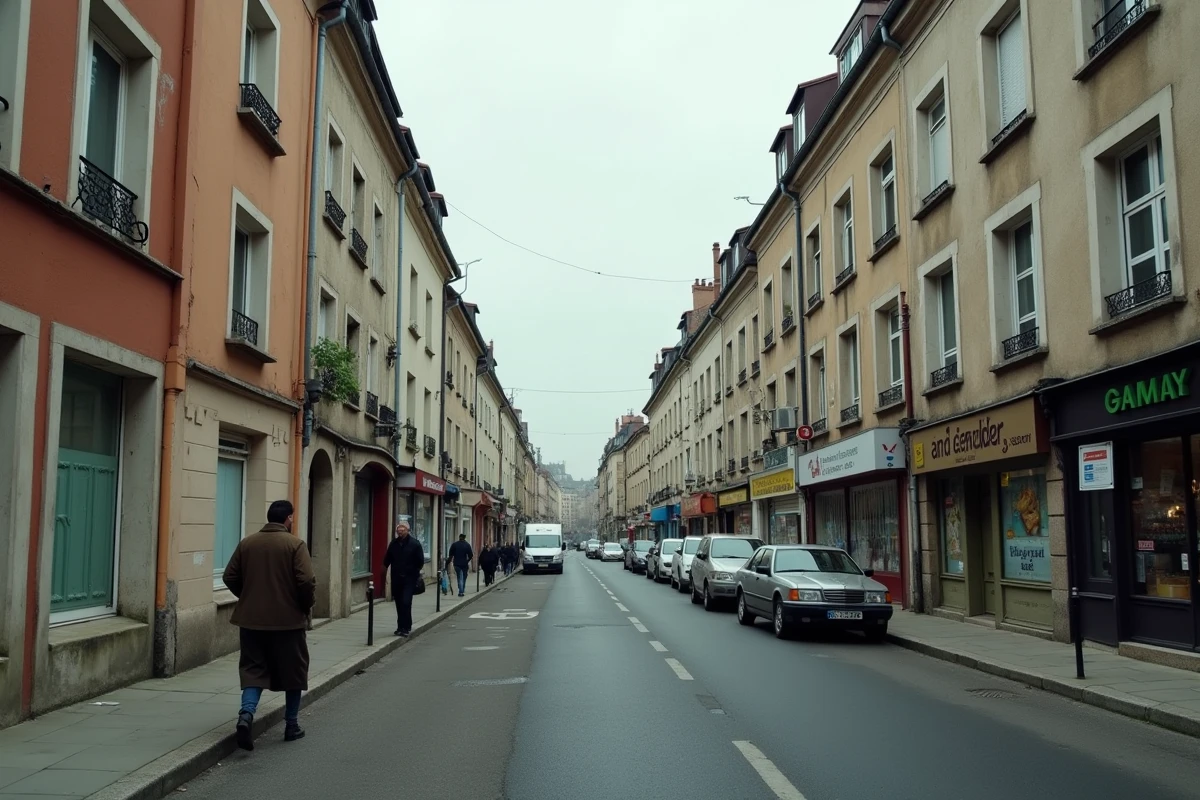
Searching for housing in Noisy-le-Grand means navigating between quiet residential areas and large housing complexes inherited from the 1970s. The city attracts due to its proximity to Paris and its two RER stations, but some neighborhoods concentrate visible tensions on a daily basis: noise, vandalism, and drug dealing points reported by residents. Understanding these disparities requires going beyond a simple list of names to see what is actually happening on the ground.
Pavé-Neuf and Abraxas: why these areas concentrate reports
Pavé-Neuf consistently appears in residents’ testimonies as the most tense area of Noisy-le-Grand. Burglary, vandalism, and the presence of drug dealing points: problems have been documented there for several years.
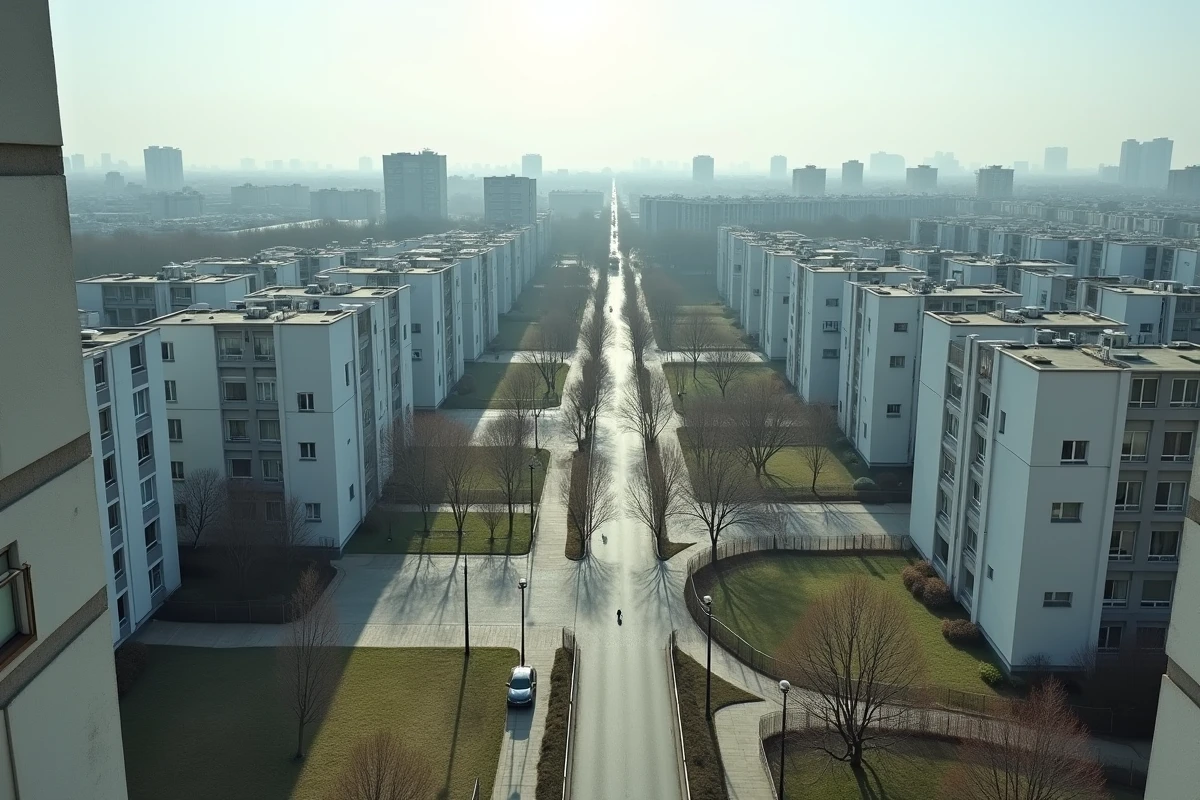
The Abraxas complex, famous for its brutalist architecture, suffers from a similar situation. Tourists come to photograph the facades, but residents describe a daily life marked by recurring incivilities and a feeling of insecurity after nightfall.
What distinguishes these two areas is the density of buildings. Close apartment blocks, poorly lit walkways, and common spaces that are difficult to monitor. Urban planning itself creates blind spots that neither the police nor social landlords can effectively cover. To delve deeper into the subject, several reviews on neighborhoods to avoid in Noisy-le-Grand detail the actual level of insecurity in these areas.

Urban renovation in Noisy-le-Grand: Champy and Mont d’Est under construction
Have you ever noticed that a neighborhood can change its appearance in just a few years? This is precisely what is at stake in Champy and certain parts of Mont d’Est. These areas are included in the New National Urban Renewal Program (NPNRU), a scheme that finances the demolition of dilapidated blocks, the reconstruction of housing, and the redesign of public spaces.
In Champy, the operations are already visible. Buildings have been demolished, new structures are rising, and the roadways are being redesigned to open up the neighborhood. The stated goal: to break the closed city effect and reintroduce a mix of housing (free ownership, social rental, intermediate residences).
In Mont d’Est, the situation is more mixed. Some streets near the regional shopping center remain lively and well-served. Others, set back, combine degraded housing and closed shops. Requalification is progressing in phases, meaning that two neighboring streets can offer very different realities.
What renovation changes (and what it does not change)
Renovating buildings improves living conditions, but does not solve everything. Residents of Champy who share their experiences on forums note that the construction generates noise and dust for several years. And the new housing, often more expensive, is not accessible to the most modest families in the neighborhood.
Urban renovation can also shift problems to neighboring areas not covered by the program. This is a documented effect in other municipalities in Seine-Saint-Denis.
Insecurity in Noisy-le-Grand: what recent data shows
The security situation in Noisy-le-Grand is evolving, and recent figures paint a more nuanced picture than a simple neighborhood ranking.
- Property crimes (burglaries, thefts) have decreased significantly since 2022, a trend observed across Seine-Saint-Denis by the prefecture.
- Domestic violence and neighborhood conflicts, on the other hand, are on the rise. Insecurity is partially shifting from public spaces to the interiors of buildings.
- The perception of residents does not always align with the statistics. A neighborhood can see its numbers improve while retaining a bad reputation, which affects property prices.
This gap between official data and local perception explains why two people can have radically opposing views on the same area. Someone living in a renovated residence in Champy does not have the same experience as their neighbor in an unrenovated block.
Real estate prices and sensitive neighborhoods: the direct link in Noisy-le-Grand
Real estate in Noisy-le-Grand presents an unusual price range for a single municipality. The residential areas near the banks of the Marne or the city center show prices significantly higher than those of the large complexes in Pavé-Neuf or Champy.
This difference does not solely reflect the quality of the buildings. It incorporates the perception of safety in the neighborhood, proximity to transportation, and the quality of schools. An apartment of the same size may be worth significantly less in Champy than in the city center, even after renovation.
Should you invest in a neighborhood under renovation?
The reasoning is tempting: buy low in an NPNRU sector and wait for the renovation to drive up prices. In practice, this bet requires accepting several years of construction, possible rental vacancies during the work phases, and no guarantee on the timeline for the delivery of public facilities.
The safest areas for a first purchase remain the city center, Yvris, or the Richardets on the residential side. The rental yield there is more modest, but the rental demand remains stable and the risk of depreciation is low.
Noisy-le-Grand is not a city to flee. Within the same neighborhood, two streets separated by 200 meters can offer a radically different living environment. Walking through the targeted area at different times, consulting ongoing urban projects with the town hall, and asking local shopkeepers remains the most reliable method to assess the real atmosphere of an address.