Marriage in France is undergoing a period of rapid changes. Between the strengthening of civil status controls, the emergence of more understated reception formats, and the rise of intimate ceremonies, couples preparing for their union in 2025-2026 are facing a landscape very different from that of five years ago. What indicators can measure these changes, and what gaps are widening between the expectations of future spouses and the reality on the ground?
Civil marriage control at the town hall: what has changed recently
One aspect rarely covered by media specializing in wedding trends concerns the tightening of administrative procedures. The Ministry of Justice has strengthened, during the 2024-2025 period, the guidelines addressed to civil status officers to combat simulated marriages and document fraud.
In practical terms, municipalities are increasingly encouraged to verify the reality of consent and the consistency of the documents provided before any celebration. This strengthening translates into separate hearings of the future spouses in certain town halls, a practice that already existed but is becoming more frequent.
For couples whose file is complete and sincere, this does not change the substance. However, processing times may lengthen in the most sought-after municipalities. Future spouses consulting the information on the Instant Mariage website will find useful benchmarks to anticipate these administrative constraints and organize their schedule accordingly.
Wedding trends 2026: comparison of reception formats
The choices of couples regarding receptions are evolving along several simultaneous axes. The table below summarizes the main trends observed by service providers and specialized platforms like Mariages.net.
| Reception format | Typical profile | Main constraint |
|---|---|---|
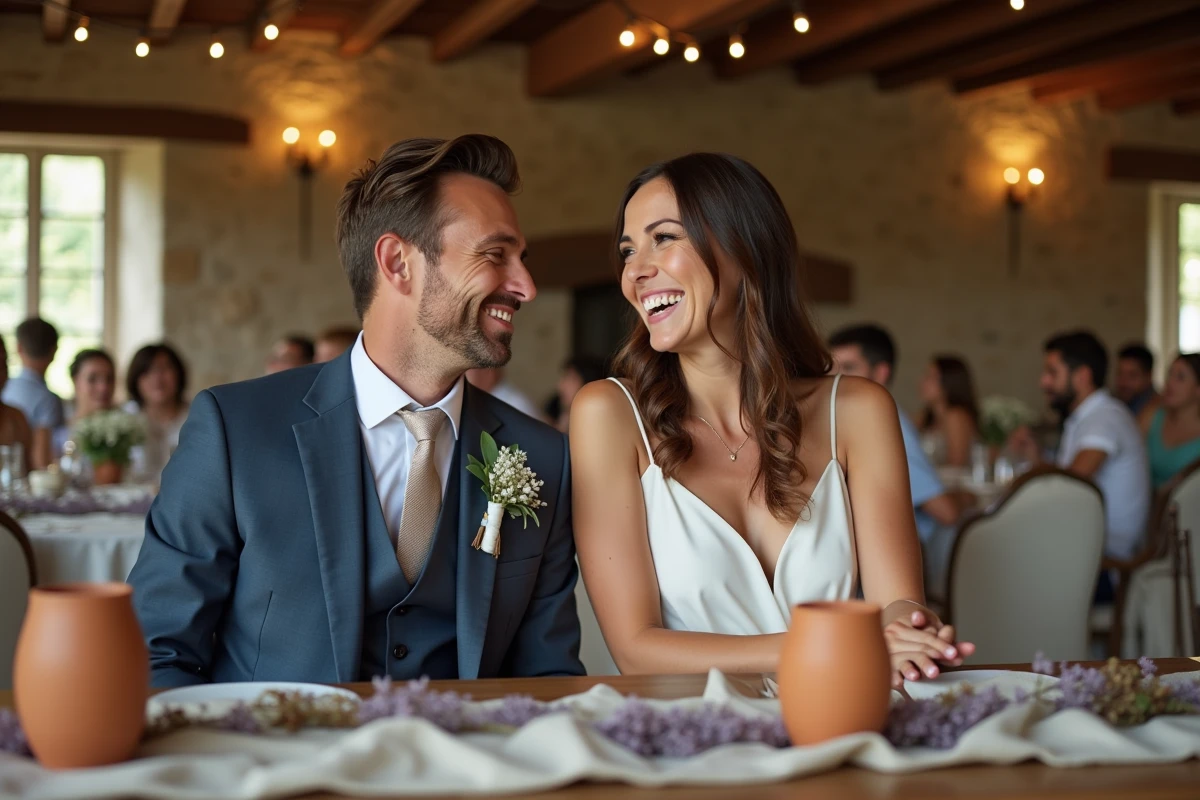
| Intimate wedding (fewer than 50 guests) | Urban couples, second marriage, controlled budget | Managing the guest list and family frustrations |
| Reception without alcohol or predominantly sober | Health-conscious couples, multicultural weddings | Limited catering options, guest perceptions |
| “Unplugged” ceremony (no phones) | Couples attached to professional photo/video quality | Clear mediation needed at entry to avoid tensions |
| Large format wedding (more than 150 guests) | Large families, traditional weddings | High budget, heavy logistics, venue availability |
The intimate format and sober receptions are gaining ground each year. Providers note a steady increase in these requests, even though the classic wedding with large tables remains predominant in France.
Alcohol-free receptions: beyond the simple mocktail
The trend of weddings offering alcohol-free options has now surpassed the stage of alternative cocktails. Specialized sites describe an evolution towards a more gastronomic and overall sober reception experience. Exceptional tea bars, food-juice pairings, tasting stations: the offering is becoming structured.
Caterers offering these options remain in the minority, but their numbers are increasing. The gap lies between the growing demand from couples and the ability of providers to offer alcohol-free menus that do not feel like a default option.
Phone-free ceremonies: the gap between desire and reality
Couples opting for an “unplugged” ceremony face a concrete implementation issue. On the ground, providers find that it is often necessary to provide clear mediation right from the welcome of guests to ensure the guideline is respected. A simple sign is not always sufficient.
The motivation of couples is understandable: photos taken by guests with their smartphones can disrupt the work of the professional photographer and create low-quality images that circulate before the official shots. The stakes are both aesthetic and logistical.
Wedding budget in France: the changing expense items
Without providing specific amounts (regional discrepancies are too significant for an average figure to make sense), several budget items are experiencing notable changes.
- Floral decoration is seeing an increase due to supply costs, pushing some couples towards alternatives like dried flowers or non-floral plant arrangements
- Reception venues are showing high booking rates, sometimes more than a year in advance in the most sought-after regions, which reduces the margin for negotiation on prices
- The photography-video item is taking an increasing share of the budget, driven by the demand for cinematic content and formats suited for social media
- Bridal attire is moving towards second-hand and rental options, with specialized sales (like those organized by Emmaüs) attracting an increasingly broad audience
The catering item remains the largest expense for the majority of couples, but it is also where the trade-offs are most visible: shared buffets rather than plated service, simplified next-day brunch, short packages.
Colors and style: what couples are choosing in 2026
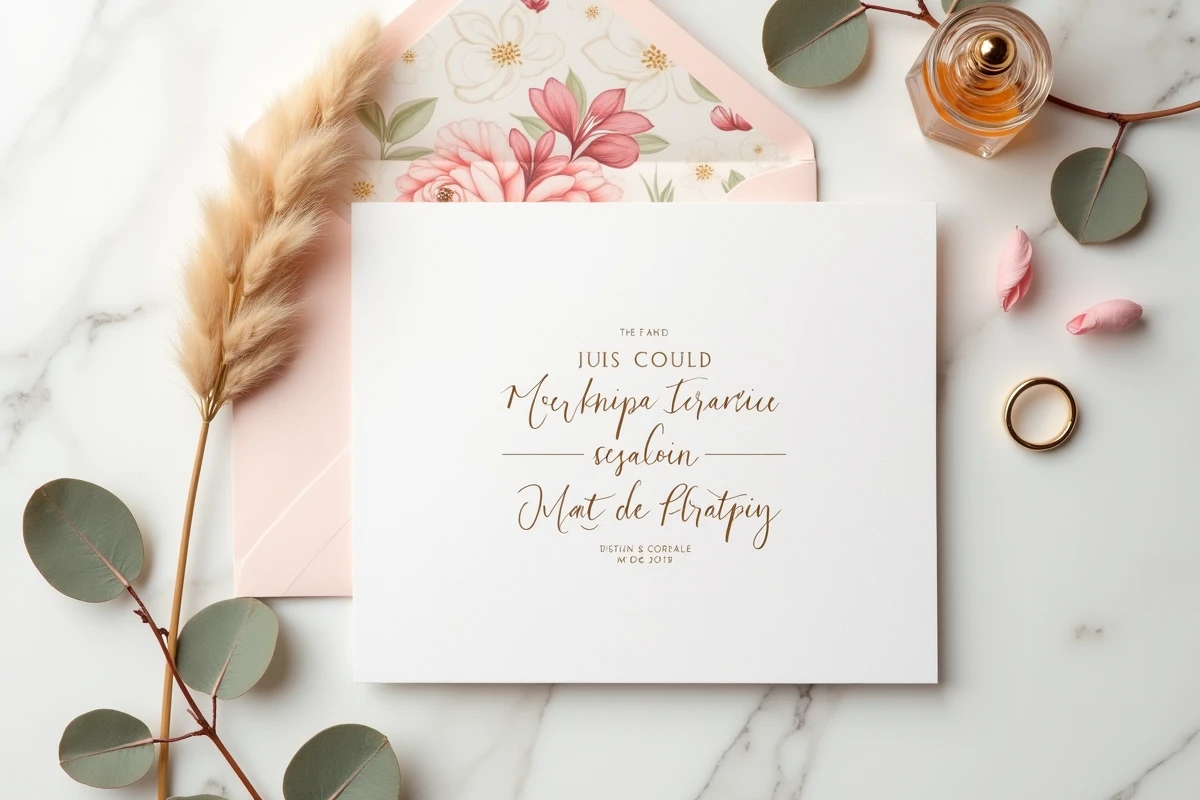
Color palettes are evolving towards bolder and more contrasting shades. Pastels, long dominant in wedding decoration, are giving way to more pronounced combinations. Terracotta, sage green, deep burgundy: couples are embracing more assertive color choices than a few seasons ago.
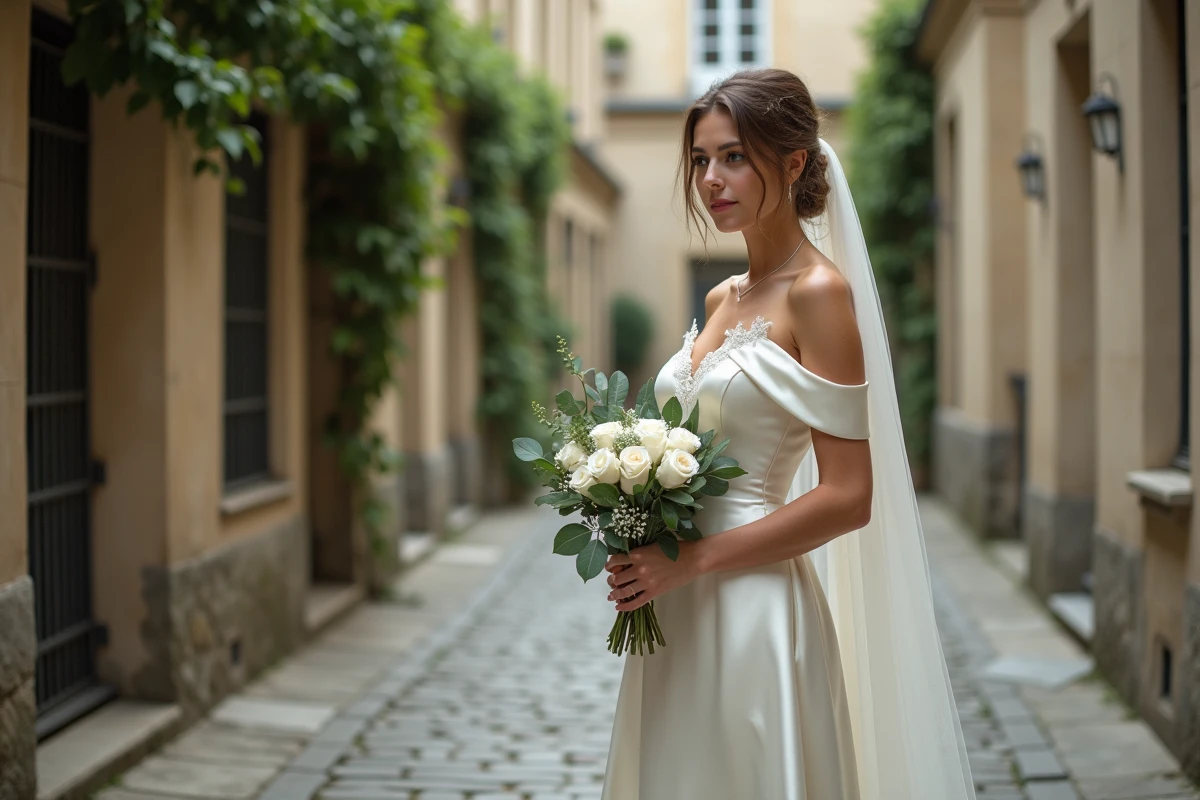
In terms of bridal hairstyles, the trends for 2026 favor styles that are both elegant and timeless. Elaborate buns, natural waves, and discreet accessories (gold pins, pearl combs) dominate requests, according to feedback from specialized hairdressers.
For dresses, the market is segmenting between two poles. On one side, custom creations with architectural details (structured sleeves, asymmetrical cuts). On the other, the second-hand wedding dress is gaining legitimacy, driven by ecological and budgetary concerns.
The available data outlines a wedding landscape in France that is fragmenting into very different formats. The couple choosing an intimate alcohol-free reception and the one organizing a large traditional wedding no longer share much, except for the civil ceremony. This diversification of practices is likely the most structuring trend of the current period.