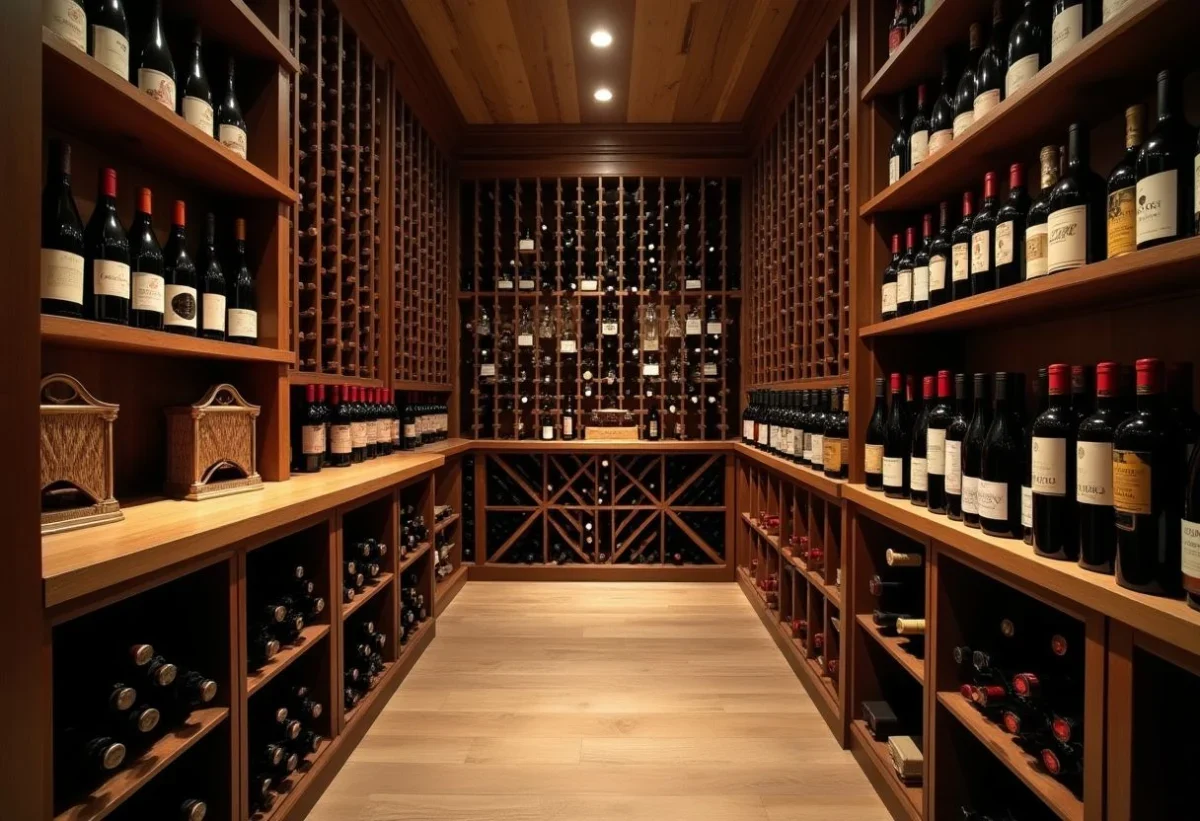
Whether you are a simple enthusiast of fine wines or a true aficionado, the wine cellar holds a special place in the art of living. More than just a storage space, it ensures the optimal preservation of bottles and the development of aromas over time. Balancing tradition and modernity, the wine cellar today appeals as much for its preservation role as for its aesthetic and convivial aspects. But how do you choose, organize, and make the most of this space?
The importance of temperature and humidity
In a wine cellar, temperature and humidity are two essential factors for the optimal preservation of bottles. Precise regulation of these elements is crucial to maintain the quality of the wine and ensure a perfect tasting experience.
- Ideal temperature: between 10 and 15 degrees Celsius, a constant temperature is vital to prevent premature or altered aging of the wine.
- Humidity: it should range between 60% and 80%. An adequate humidity level prevents corks from drying out and, consequently, the oxidation of the wine.
- Ventilation: although the cellar should remain dark, slight ventilation helps maintain a healthy environment and prevents mold.
Choosing the perfect location
The choice of location for your cellar is a decision that deserves your full attention. A suitable location not only ensures the preservation of your precious bottles but also promotes the development of their aromas over time.
A basement is an ideal location for a wine cellar. The temperature and humidity are naturally stable there, and the absence of direct light protects the bottles from UV rays. Cellars dug into natural caves or quarries also provide a conducive environment for wine maturation. Finally, acquiring an electric wine cellar can be a modern and effective solution for those without underground space.
Organization and labeling
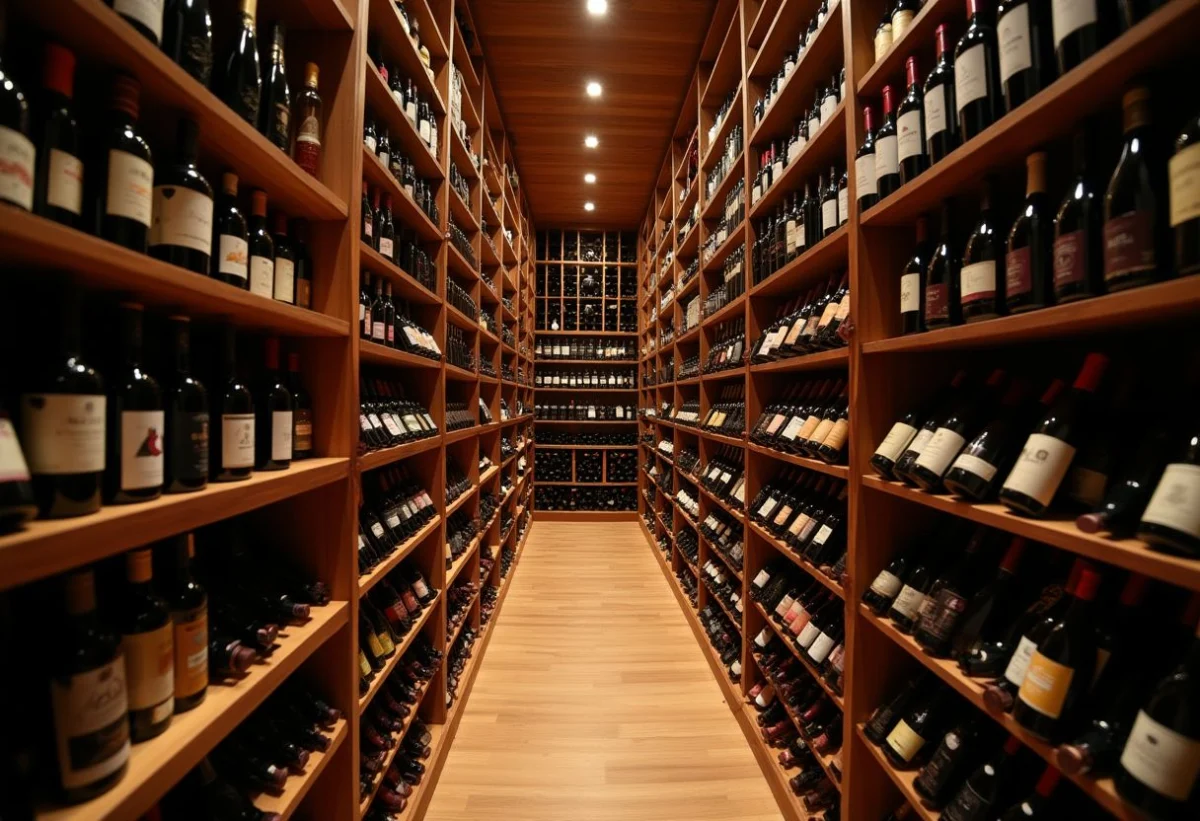
A meticulous organization of your wine cellar ensures easy access to your bottles and contributes to the harmony of this space. Classifying the bottles according to various criteria simplifies the selection during tastings.
- Classification by region: allows grouping wines according to their geographical origin.
- Classification by grape variety: ideal for enthusiasts of certain types of grapes, thus facilitating selection.
- Classification by vintage: arranges bottles based on their production year, essential for tracking the evolution of aging wines.
Clear and precise labeling of bottles with information about the wine, such as the estate, grape variety, and vintage, is a practice that promotes the organization and management of your collection.
Passion and patience: the keys to success
A wine cellar is not just a storage space; it reflects your passion for oenology. Patience is an invaluable virtue for any wine lover. Allowing time for the bottles to develop their unique character is an integral part of this art.
Investing in good wine requires particular attention to detail and a deep knowledge of the products. Participating in tastings and exchanging with other enthusiasts allows for improvement and enriches your palate. Finally, taking the time to discover lesser-known wines is a wonderful adventure that makes each tasting unique.
The wine cellar embodies a rich and varied world, where each bottle is a promise of escape and discovery. It invites you on a fascinating sensory journey, guided by the care and passion you invest in it.