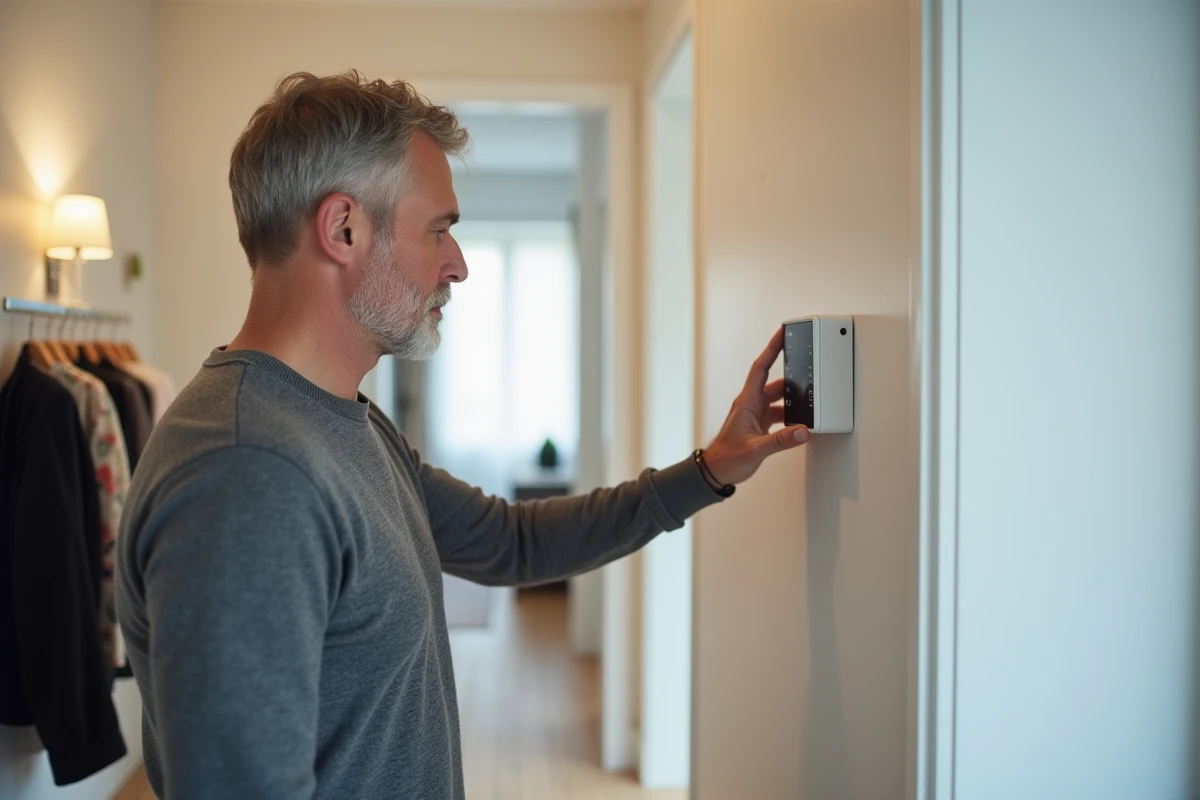
An alarm system represents an investment of several hundred to a few thousand euros depending on the level of protection chosen. The question of amortization arises as soon as the purchase is made, whether for an individual looking to recoup their expense through insurance savings or for a furnished rental operator who records the equipment on their balance sheet. The parameters influencing this calculation go far beyond the simple lifespan of the equipment.
Connected Alarm in LMNP: An Amortization that Affects Taxation at Resale
Accounting guides treat the amortization of an alarm as a line item among others in a fixed asset table. For a property used in non-professional furnished rental (LMNP), the reality is more complex.
The connected alarm integrated into the property falls under depreciable fixed assets. Its amortization period, generally between three and five years for connected systems, reduces the taxable income each year. Understanding the amortization period of an alarm system allows for proper calibration of this expense in the overall accounting plan of the property.
The trap lies at resale. Under the actual LMNP regime, the amortizations applied do not increase the taxable capital gain for individual capital gains. Therefore, the amortized alarm does not generate any direct tax cost upon sale, contrary to what some owners fear. However, if the landlord switches to LMP (professional furnished rental), the rules change: the deducted amortizations then increase the taxable professional capital gain.
Integrating a connected alarm into the overall amortization calculation of an LMNP property thus has a real effect on annual net profitability, with no consequences at resale as long as the LMNP status is maintained. This distinction is often absent from most practical guides on the subject.

Linear or Declining Amortization: Which Method for an Alarm
Two amortization methods apply to security systems: linear and declining. The choice depends on the type of operation and the tax strategy.
Linear Amortization
The linear method spreads the acquisition cost evenly over the expected usage period. For a traditional wired alarm, the duration is generally between five and ten years. Connected alarms are amortized over three to five years due to accelerated technological obsolescence, particularly with the integration of functions related to artificial intelligence.
This method is suitable for individuals in LMNP who wish to smooth their tax burden predictably.
Declining Amortization
The declining method allows for higher deductions in the early years. It is aimed at structures subject to corporate tax or operators anticipating a rapid renewal of their equipment.
For an alarm system, declining amortization is justified when the installation includes components with high obsolescence (IP cameras, connected sensors, home automation modules). Technological obsolescence shortens the actual usage duration well below the physical lifespan of the equipment.
Home Insurance Premium Reduction: The Real Amortization Lever for Individuals
For an owner-occupant or a landlord who does not practice accounting amortization, the profitability of an alarm goes through another channel: the reduction of the home insurance premium.
Several insurers, including AXA and Allianz according to feedback compiled by the Festival du Mot, offer a discount on the multi-risk home insurance contract when the property has a certified alarm system. The amount of this discount varies according to:
- The type of system installed (remote monitoring with intervention, standalone alarm with detectors, connected video surveillance)
- The certification of the equipment and its possible connection to an approved monitoring center
- The level of coverage of the insurance contract and the geographical area of the property
The premium reduction often constitutes the first measurable return on investment for an individual. The time required to amortize the purchase directly depends on the ratio between the initial cost of the system and the annual savings achieved on insurance.
Field feedback varies on this point: some insured individuals obtain a significant reduction, while others see a marginal effect. Negotiating the insurance contract at the time of installation remains crucial.
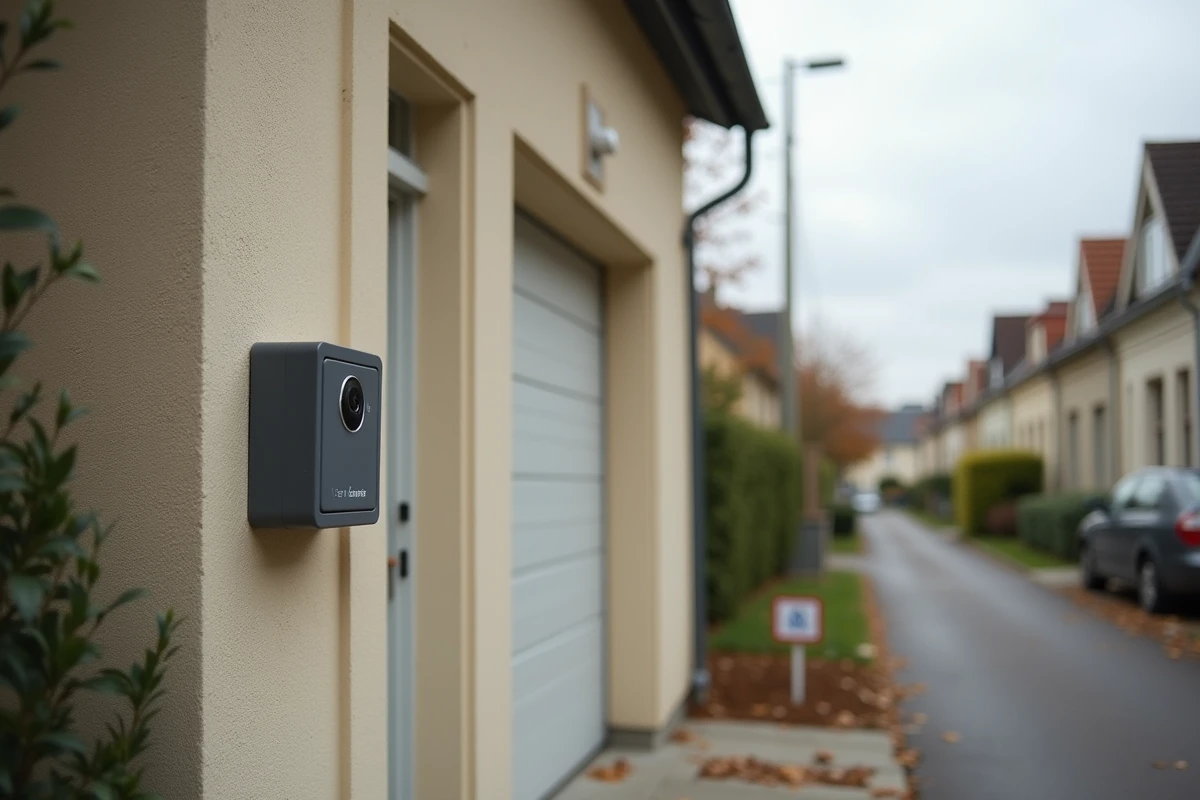
Recurring Costs and Maintenance: What Extends the Actual Amortization Period
The amortization calculation is not limited to the purchase price. Several recurring costs modify the actual profitability duration of the system.
- The monitoring subscription, billed monthly, represents a continuous charge that adds to the initial investment
- The certified annual maintenance, made more stringent since the decree n°2025-347 of March 15, 2025 for connected alarms connected to a monitoring center
- The replacement of components (batteries, detectors, communication modules) whose frequency depends on the intensity of use
- Software updates, sometimes paid on proprietary systems after the warranty period
This decree imposes an obligation for certified annual maintenance which generates recurring costs not fully deductible in all tax regimes. These additional costs can double the effective amortization period compared to the purchase price of the equipment alone.
A system purchased at a moderate price but associated with an expensive monitoring subscription will take longer to become profitable than a more expensive standalone system without recurring costs. The choice between these two models directly influences the calculation.
Physical Lifespan and Technological Obsolescence of Security Systems
The accounting amortization period does not always correspond to the actual lifespan of the equipment. A traditional wired system can operate for a decade without major intervention. A connected system often becomes obsolete in three to five years, when the manufacturer stops updates or when communication protocols evolve.
This divergence between physical lifespan and technological usefulness poses a concrete problem: should one amortize over the lifespan of the equipment or over its functional relevance duration? In accounting, the expected usage duration takes precedence. For an investor in LMNP, retaining a short duration allows for maximizing the annual deduction, provided that obsolescence can be justified to the tax authorities.
The connected security market is evolving rapidly. Choosing a system compatible with open standards rather than a closed ecosystem can extend the actual usage duration and, consequently, improve the overall return on investment, whether considered in accounting amortization or insurance savings.