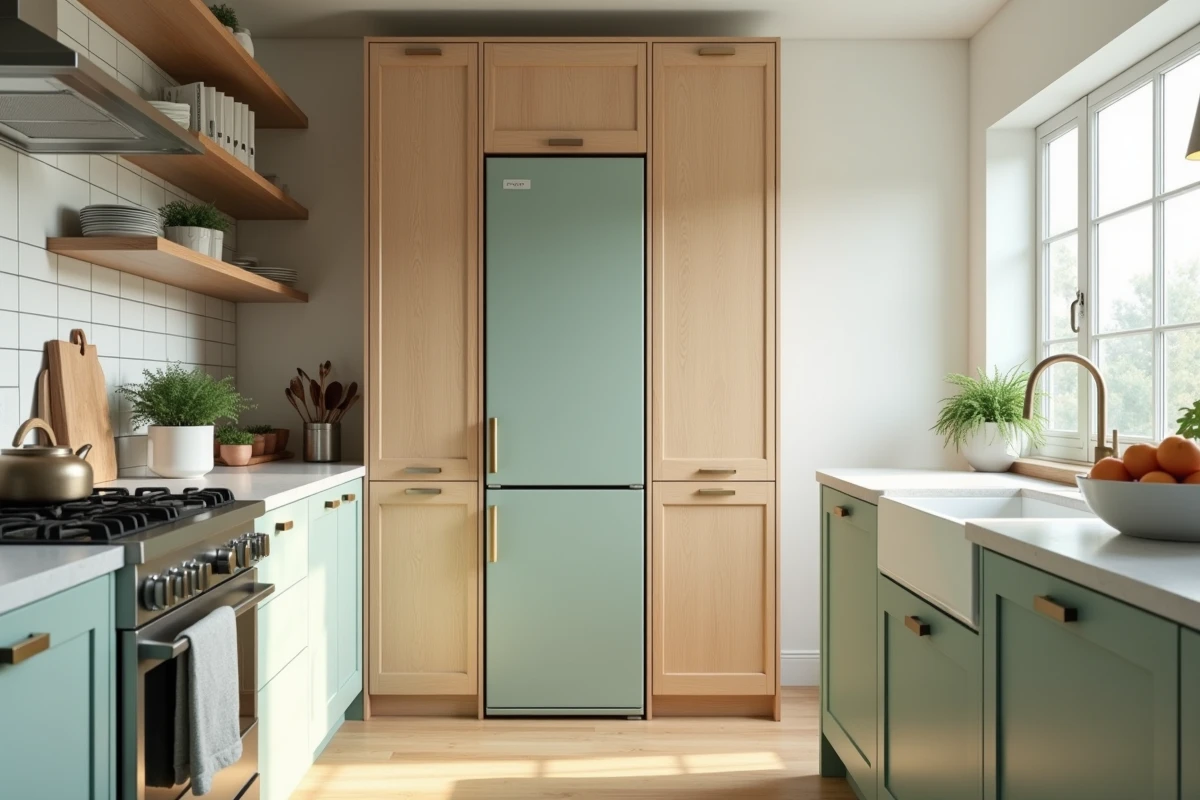
The back of a refrigerator houses pipes, a condenser grille, and power cables. In an open kitchen that connects to the living room, this technical side often remains exposed and disrupts the visual harmony of the space. Hiding the back of the refrigerator requires balancing two constraints: the aesthetics of the cover and the air circulation necessary for the compressor to function properly.
Rear ventilation of the refrigerator: the technical constraint to respect before any decor
Before installing any panel or fabric, it is essential to understand why the back of the fridge remains clear upon leaving the factory. The condenser, located at the back or underneath the appliance, dissipates the heat produced by the refrigeration cycle. Blocking this airflow causes the compressor to overheat, increases electricity consumption, and shortens the appliance’s lifespan.
The update of the NF P 98-351 standard from November 2024 mandates a minimum distance of 5 cm between the cover and the back of the refrigerator to ensure ventilation. This requirement directs the choice towards slatted partitions or raised structures, excluding any covering placed directly against the grille.
In practical terms, any concealment project must allow for an air gap of at least 5 cm at both the bottom and the top. A cover closed on three sides without openings turns the space into a thermal trap. To check that ventilation remains adequate after installation, simply run your hand behind the panel: air should flow without noticeable resistance.
Several detailed solutions for dressing this area are gathered on the Déco en Vogue website, with approaches tailored to different kitchen configurations.
Slatted wooden partition: the most suitable solution for open kitchens
A partition made of vertical wooden slats, spaced a few centimeters apart, conceals the back of the refrigerator while allowing air to pass through. This type of screen integrates well into open kitchens without weighing down the space, and the wood adds a warm texture that contrasts with the metal of the appliance.
Choice of wood and fixing
Raw pine, oak, or beech work well for this use. The slats are fixed to a self-supporting frame placed on the floor, without drilling into the wall or touching the refrigerator. A self-supporting frame makes disassembly easier during condenser cleaning operations.
The spacing between each slat must remain greater than 2 cm for airflow to circulate. A spacing of 3 to 4 cm offers a good compromise between visual opacity and ventilation. The height of the screen should match that of the refrigerator, no more: a panel that is too tall creates a wall effect that visually partitions the room.
- Square-section slats (about 3 x 3 cm) for a regular and contemporary appearance
- Natural oil or matte stain finish, which withstands kitchen humidity better than acrylic paint
- Low raised frame by a few centimeters to allow air passage under the structure
- FSC certified wood if environmental considerations are important in material selection
The budget remains moderate: a few slats, two vertical posts, and screws are sufficient. The project can be completed in half a day with a miter saw and a drill-driver.
Decorative acoustic panels: reducing compressor noise at the same time
Recently, panels made of recycled felt or cork designed for home use have been used behind refrigerators. Their primary function is acoustic: they absorb some of the vibrations emitted by the compressor, a real advantage in apartments where the living room adjoins the kitchen.
These panels come in various colors (anthracite gray, terracotta, sage green) and in modular formats that can be assembled like a puzzle on a wall support or an independent frame. Cork, in addition to its acoustic properties, naturally resists moisture, making it suitable for a kitchen environment.
Installation precautions behind the refrigerator
The panel should never be glued directly to the condenser grille. The most reliable method is to fix the tiles onto a medium-density fiberboard or thin plywood panel, which is itself held in place by brackets away from the refrigerator. This way, the famous 5 cm air gap is maintained.
Reinforced magnetic fasteners are a better alternative to adhesives in this area. User feedback on specialized forums indicates that adhesive panels detach after a few months due to heat and steam. Neodymium magnets fixed to the frame and the refrigerator’s metal wall ensure durable support and easy removal for maintenance.
Open storage unit or curtain: alternatives depending on available space
When the kitchen configuration does not allow for a partition (lack of space, narrow passage), two alternatives deserve consideration.
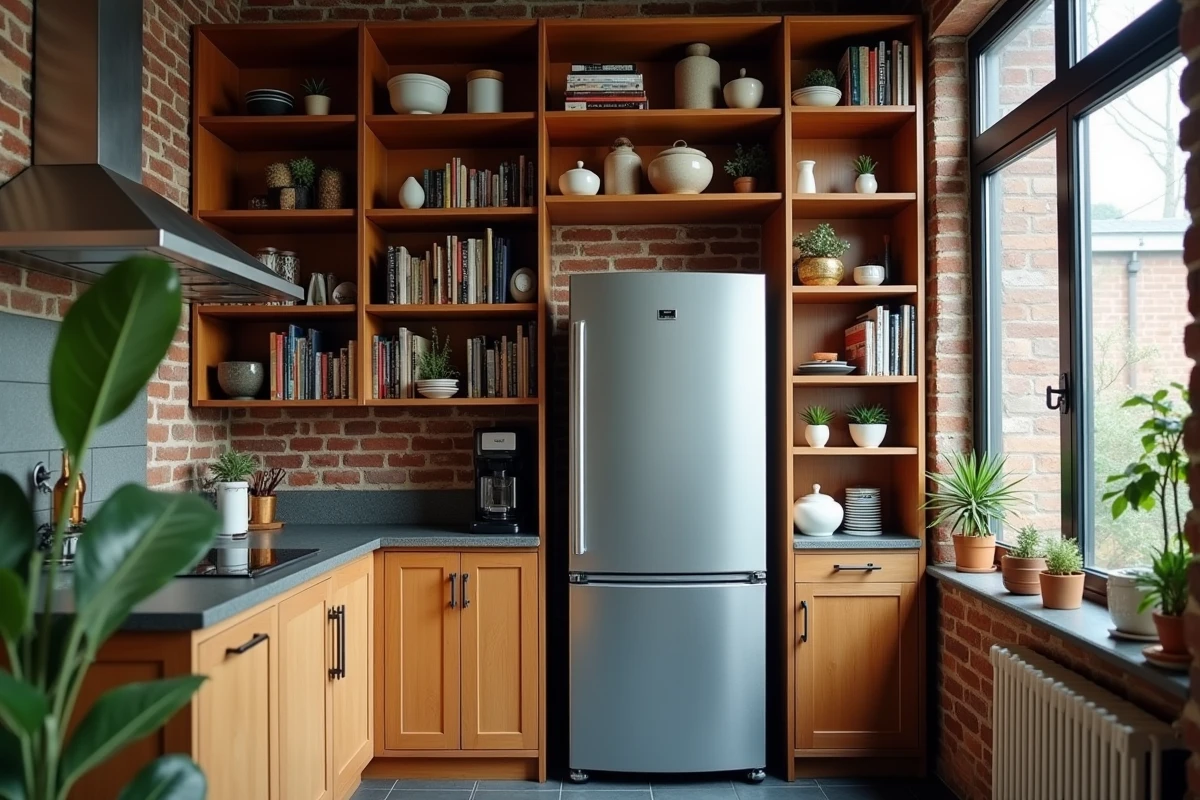
An open shelving unit placed against the back of the refrigerator serves a dual purpose: it conceals the technical part and provides additional storage for dishes, cookbooks, or decorative items. The absence of a back on the unit ensures air circulation. Ladder-style shelves or wire metal furniture are particularly suitable, as their airy structure does not retain heat.
A thick fabric curtain, stretched on a rod fixed to the ceiling or between two walls, is the quickest solution to implement. Washed linen or textured cotton adds style without the shower curtain effect. The rod should be positioned far enough in front of the refrigerator to avoid pressing the fabric against the grille.
- Backless shelving unit: ideal when the refrigerator serves as a divider between the kitchen and living room
- Linen curtain on a rod: suitable for rentals, as no drilling into kitchen furniture is required
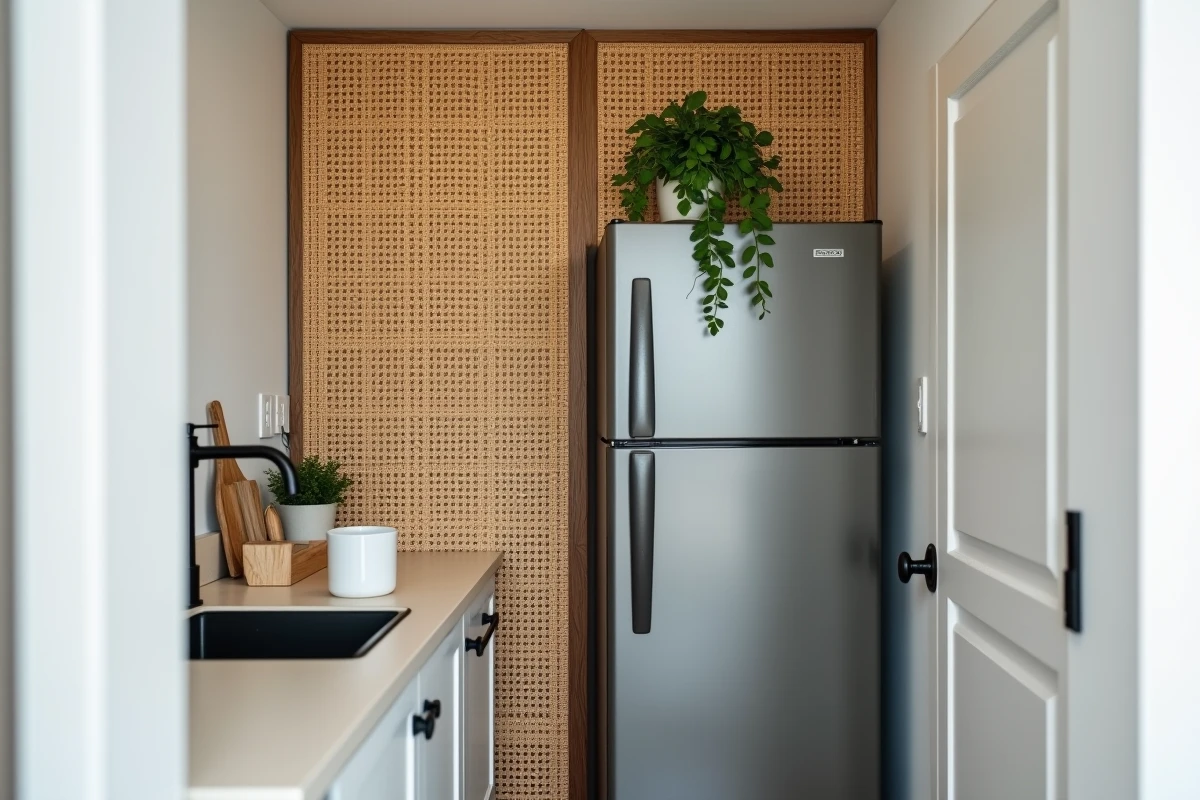
- Natural cane panel mounted on a frame: lightweight, trendy, and sufficiently open for ventilation
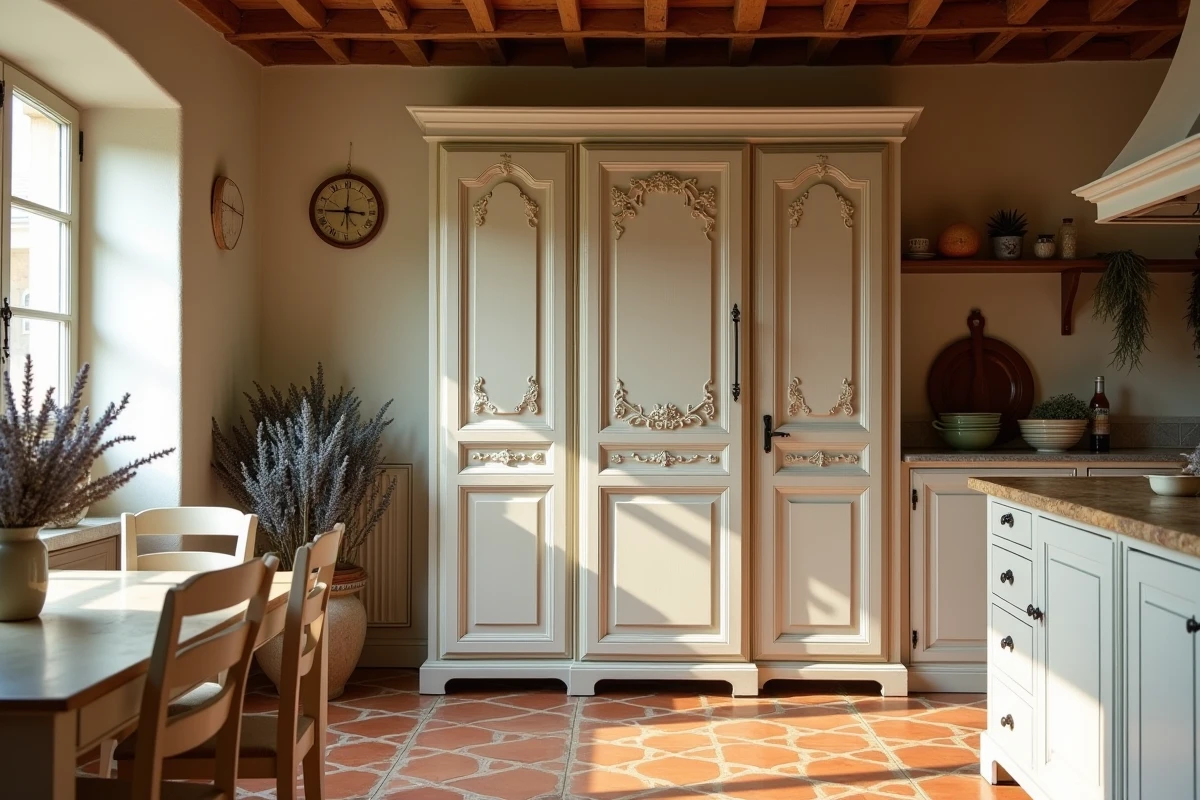
The choice between these options primarily depends on the depth available behind the refrigerator and the overall style of the room. A wooden partition matches a Scandinavian or Japandi kitchen, a cork panel suits a contemporary interior, and a linen curtain creates a softer ambiance.
Regardless of the chosen cover, ensuring easy access to the back of the refrigerator remains a priority. The condenser accumulates dust and must be cleaned regularly to maintain the appliance’s energy efficiency. A removable system, on wheels or on hinges, prevents turning a decorative trick into a maintenance obstacle.