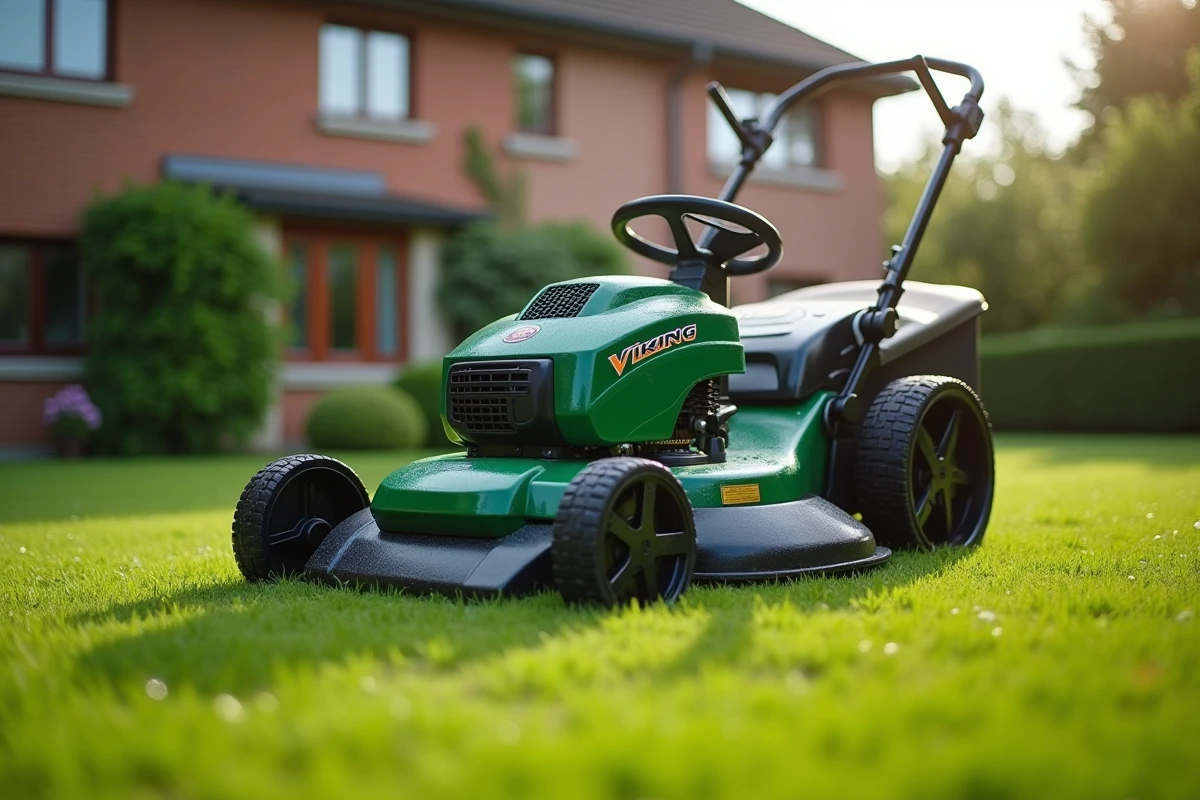
On a a sloped lawn with dense grass, the mower that seemed perfect on flat turf quickly shows its limits. We wanted to understand how the Viking range (now integrated into the STIHL ecosystem) performs in these demanding conditions, and more broadly, what it is worth for everyday use in a family garden.
Viking Mower on Sloped Terrain: Maintenance without Mulching and Dense Grass
Mulching is often presented as the miracle solution for nourishing the soil. On an inclined terrain with thick grass, the reality is more nuanced: the residues accumulate at the bottom of the slope, forming wet clumps that eventually suffocate the lawn.
We tested Viking models with rear discharge and collection bag in this type of configuration. Classic collection, without mulching, gives a clean result even when the grass has grown a few centimeters too much between two mowings. The bag fills quickly on dense grass, but the cut remains clean if we raise the height by one notch.
For those looking for a review of the Viking mower range in real conditions, this point deserves attention: the thermal engine of the self-propelled models helps maintain a steady pace on inclines, where a push mower quickly tires the user.
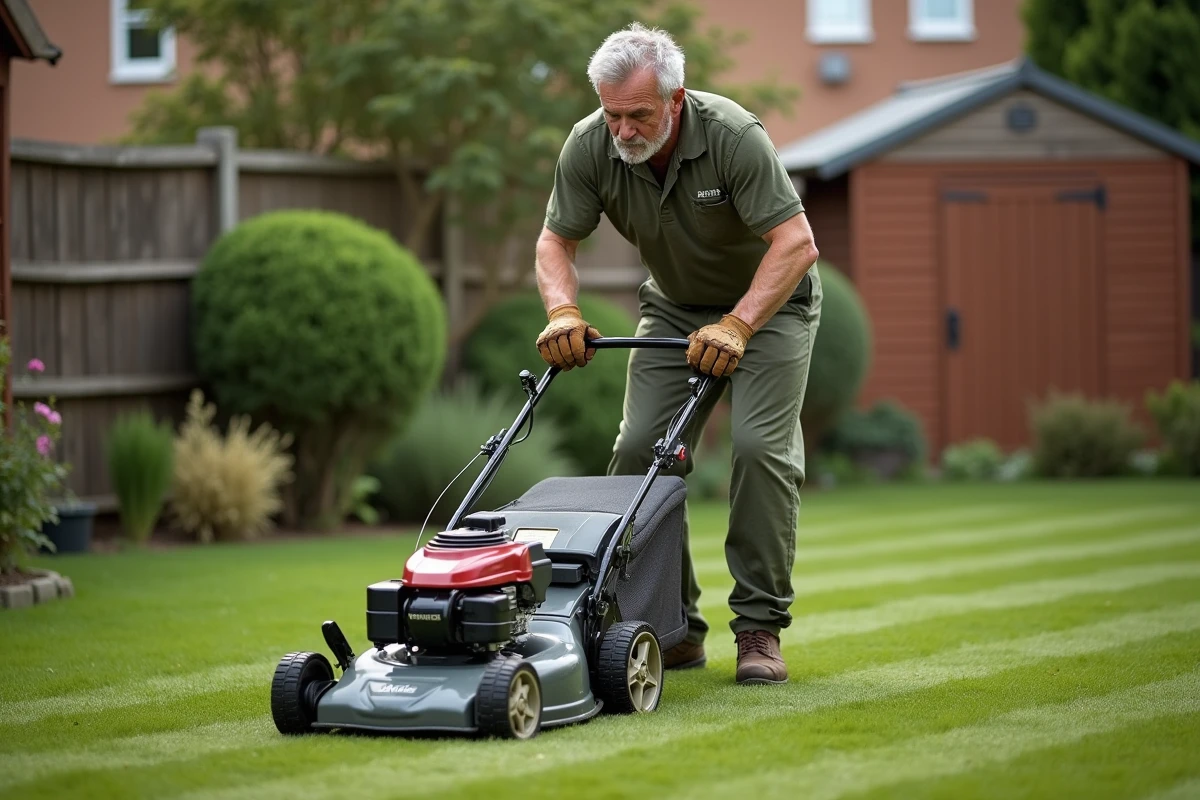
The self-propelled system compensates for gravity, but we find that the speed must be reduced when going downhill to avoid scalping the grass in the dips. The wide rear wheels present on some Viking models improve traction, a detail that makes a difference on wet sloped ground.
Engine Reliability and Routine Maintenance of Thermal Viking Mowers
Viking uses engines from the STIHL line and, on some models, Briggs & Stratton blocks. Feedback varies on this point depending on the exact model, but the general trend is good longevity when basic maintenance is respected.
Routine maintenance remains classic for a thermal mower:
- Oil change once or twice per season depending on mowing frequency, with access to the drain plug generally well cleared on Viking models
- Cleaning the air filter after each use on wet or dusty grass, a quick gesture that significantly extends the engine’s lifespan
- Sharpening or replacing the blade at least once a year, more often on stony ground
- Checking the spark plug at the beginning of the season to ensure reliable starting
The availability of spare parts is a concrete advantage of the brand. The STIHL/Viking dealer network covers the territory well, making it easy to access blades, belts, and filters without going through import channels.
Starting remains a sensitive point on thermal mowers in general. Recent Viking models incorporate an easier starting system that reduces the effort on the starter. It’s not at the level of electric starting, but it is a notable improvement compared to previous generations.
Ease of Use and Model Choice According to Garden Size
Ease of use depends less on the brand than on the suitability between the model and the area to be mowed. Viking offers cutting widths ranging from compact formats suitable for urban gardens to wider decks for areas of several hundred square meters.
For a medium-sized garden, a self-propelled model with an intermediate cutting width offers the best compromise between maneuverability and efficiency. The height-adjustable handlebars on most Viking models prevent back pain during long sessions.
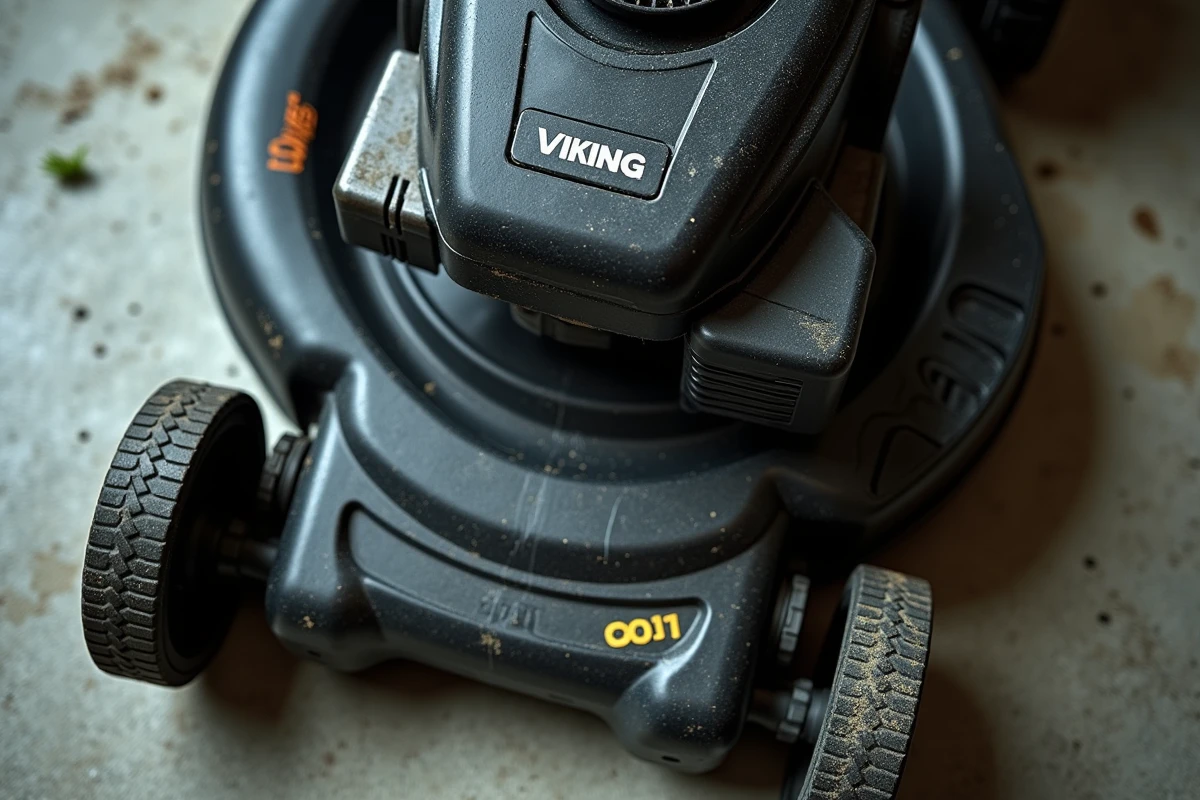
The noise level of Viking thermal models is average for the category. For those seeking more silence, the range also offers corded and battery-powered mowers, but you then lose the power needed on dense grass or uneven terrain.
Thermal or Battery: Which Choice for Which Use
The thermal option remains relevant for areas larger than a few hundred square meters and for uneven terrain. The battery is suitable for small flat gardens where noise and emissions are a concern.
On battery models, autonomy limits the area covered in a single charge. Viking battery mowers share the battery system with other STIHL tools, which can justify the investment for a user already equipped in this ecosystem.
Value for Money of Viking Mowers Compared to Competitors
Viking positions itself in a mid to high-end segment. Prices are higher than those of big-box brands, but the quality of manufacturing and the service network justify the difference for regular use.
The real criterion for choice remains the proximity of an authorized dealer. A Viking mower purchased from a STIHL professional benefits from follow-up, adjustment advice, and quick access to parts. This service disappears with an online purchase on a marketplace.
Against Honda or Husqvarna, Viking stands out for its integration into the STIHL ecosystem and the robustness of its chassis. The difference is especially noticeable over time: after several seasons, Viking models maintain stable cutting quality while cheaper machines show signs of wear on the housing or transmission.
Choosing a Viking mower is justified when you plan to keep it for a long time and are willing to allocate a slightly higher budget for the purchase. For occasional use on a small flat area, less expensive alternatives will do the job without noticeable difference.