Growing a lemon tree, whether in a garden or indoors, requires care and specific know-how to see it thrive. These Mediterranean fruit trees prefer mild climates and can suffer if conditions are not ideal. You need to master watering, fertilization, and pruning techniques while being vigilant for signs of diseases such as scab or citrus canker. Lemon tree owners must be well-informed to maintain the health and vitality of their tree, ensuring a beautiful harvest of these highly prized citrus fruits.
Care and prevention for a healthy lemon tree
Balanced fertilization: For your lemon tree to show vigorous growth, fertilize it with a specific fertilizer for citrus or a balanced universal fertilizer. This input should be rich in nitrogen, phosphorus, and potassium, key elements for the harmonious development of the tree.
Regular watering: Water your lemon tree consistently, taking care to avoid any excess water that could lead to root rot. Ensure that the soil drains well, as stagnation can be fatal for the tree. Controlled irrigation is therefore essential to maintain the right moisture without overwhelming the plant.
Annual pruning: Pruning your lemon tree each year allows for better air circulation within the tree’s structure and promotes better sunlight penetration, which is essential for photosynthesis. Remove dead or diseased branches as well as those that cross over each other to stimulate abundant fruiting.
Lemon tree, yellowing leaves, fruit drop, or curling leaves, each symptom is an indicator of health that should not be overlooked. Yellowing leaves can indicate a nitrogen or magnesium deficiency; in this case, react quickly by providing your lemon tree with the appropriate fertilizer. Prevention is the best strategy: closely monitor for the appearance of mealybugs or Asian citrus psyllids, pests that require immediate intervention, whether chemical or biological through the introduction of natural predators.
Diagnosis and treatment of common diseases and pests
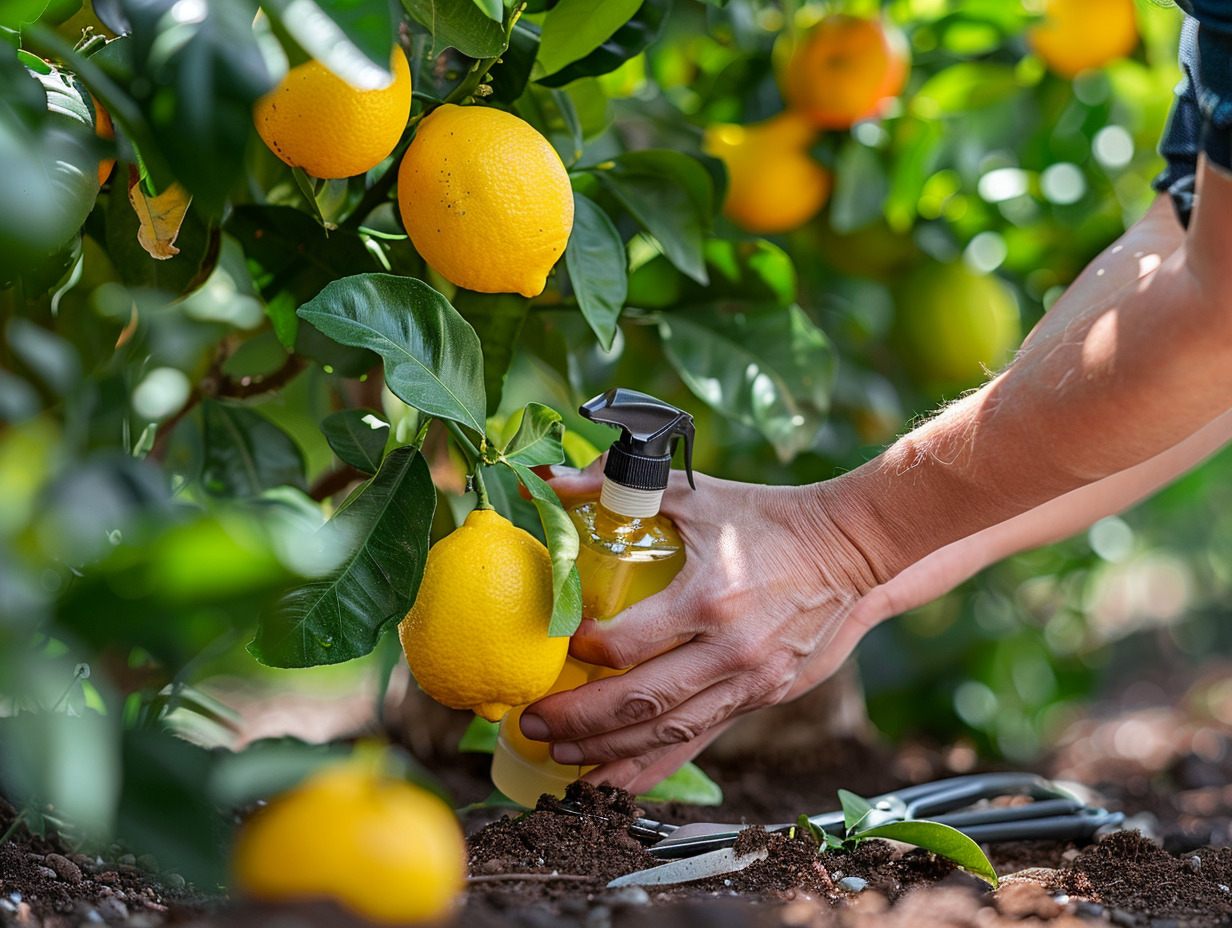
Controlling the Asian citrus psyllid: Is your lemon tree suffering from yellowing leaves, accompanied by honeydew on the leaves and fruits? Consider the Asian citrus psyllid, a harmful insect that feeds on the sap of the lemon tree. To counter this threat, the use of appropriate insecticides or the introduction of natural predators, such as ladybugs, is necessary.
Eradicating mealybugs: The presence of a cottony substance on the leaves and fruits is often the work of mealybugs. Treat your lemon tree with appropriate insecticides or opt for biological methods by welcoming natural predators of these pests into your garden.
Correcting deficiencies for healthy growth: Yellowing leaves, especially the older ones, often reveal a nitrogen deficiency. Amend the soil with a fertilizer rich in this element. Leaves that yellow between the veins signal a magnesium deficiency; again, a fertilizer containing magnesium can restore the plant’s vigor.
Preventing fruit drop and leaf distortion: Early fruit drop can be caused by inappropriate fertilization, irregular watering, or temperature fluctuations. Ensure regular fertilization and watering while avoiding sudden temperature changes to optimize fruit production. As for curling leaves, often a sign of water stress or exposure to strong winds, ensure sufficient watering and protect the tree from overly harsh elements. Stay vigilant against pest infestations that can also cause this symptom.