
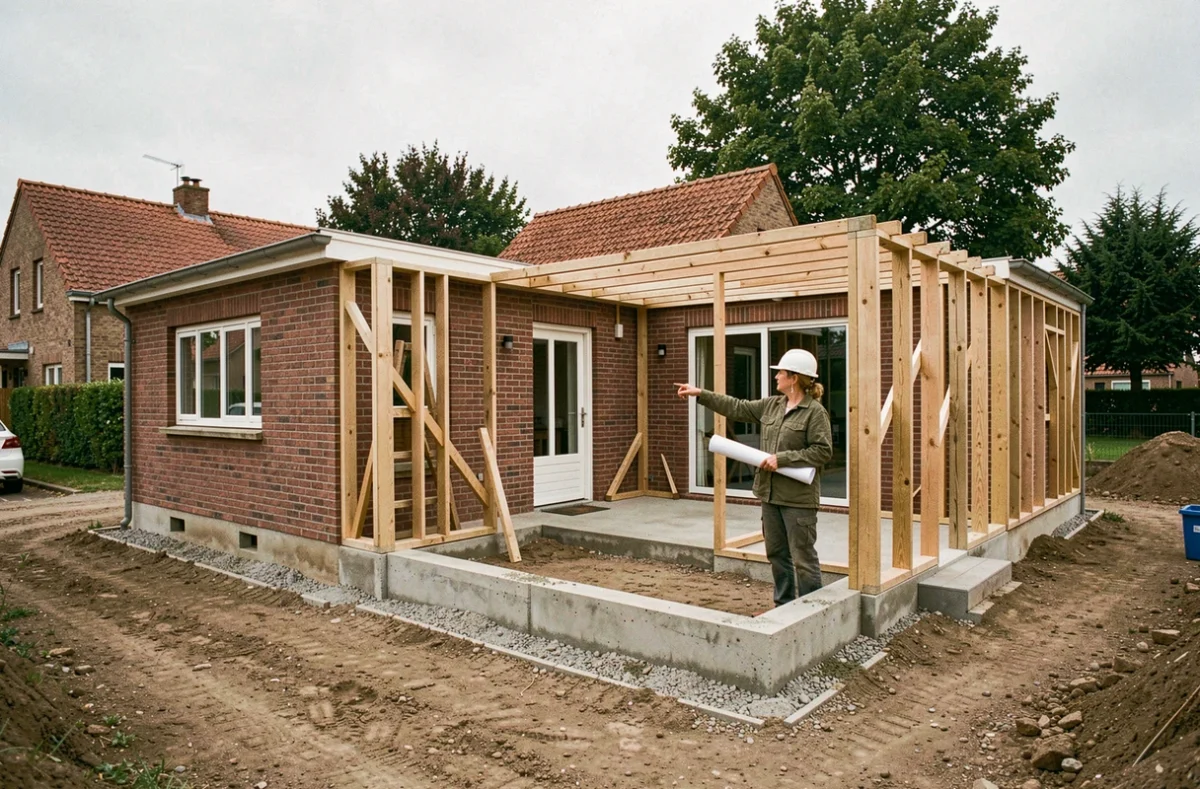
Form H1 (cerfa 6650) does not apply to all building work. It is intended for property owners whose extension changes the nature of the property: adding living space, converting an outbuilding into a living area, or carrying out major structural alterations. Simple exterior renovations or roof repairs do not fall within this scope.
90-day deadline after completion: when it starts and how to calculate it
The 90-day deadline starts on the date the work is completed, not when the building permit is issued or work begins. Completion means the point at which the premises can be used, even if some finishing work remains.
The relevant date is the one stated on the declaration certifying completion and compliance of the work (DAACT) filed with the town hall. For a sale off-plan, it is the date shown on the payment request for the final installment.
Meeting this deadline directly affects eligibility for any temporary property tax exemption. Filing on the 91st day may be enough to reduce or even eliminate this benefit. We explain more below.
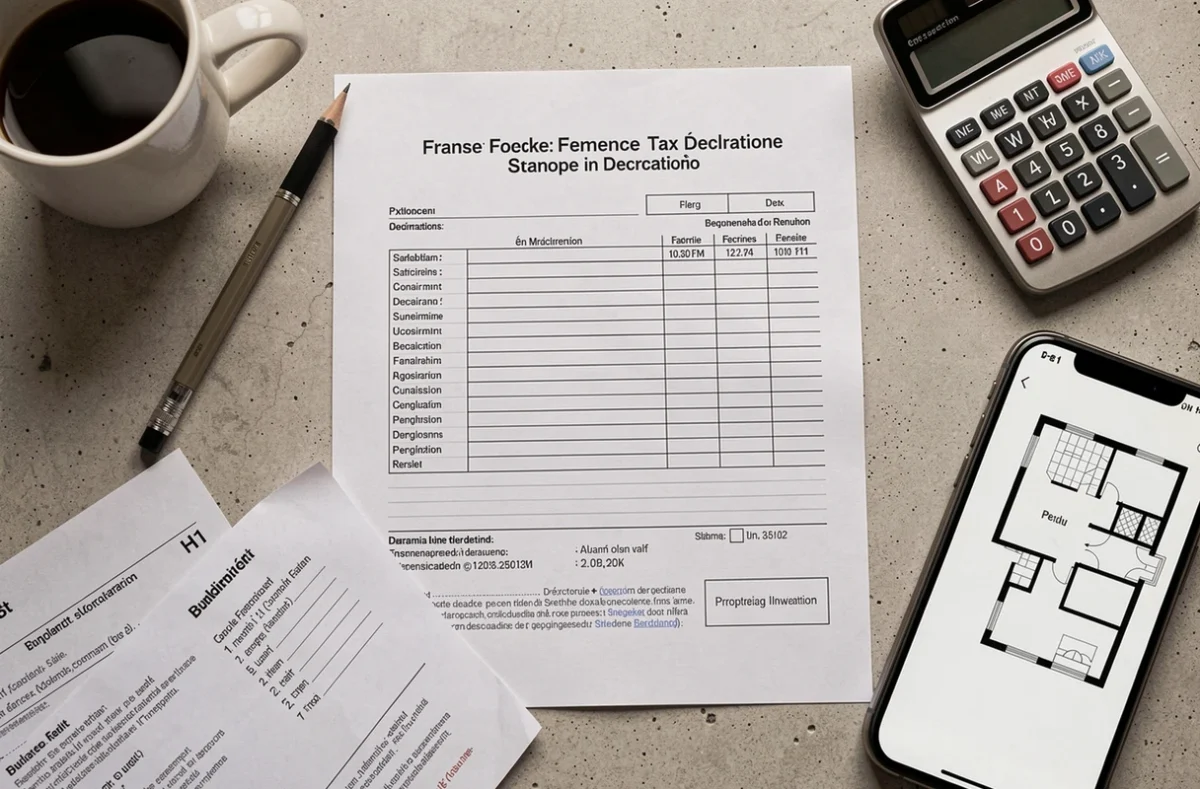
The H1 form declaration for tax purposes must be sent to the property tax office responsible for the location of the property, together with supporting documents relating to the construction.
Form H1 and online filing: two options, same requirements
Since the launch of the “Biens immobiliers” section on impots.gouv.fr, property declarations relating to planning permission can be filed online. The paper cerfa 6650 form is still available to property owners who cannot use the online service.
In either case, the same information must be provided:
- Deed of purchase for the land or house, including the lot number if the property is part of a condominium or housing development
- Construction plans and a copy of the building permit
- Date the work was completed (DAACT or payment request for an off-plan purchase)
- Details of the premises: number of rooms, floor area, amenities, outbuildings
- Accepted loan offer if the project is financed with a government-backed loan (PAS, PTZ)
Form H1 applies exclusively to detached houses and their outbuildings. For an apartment, form H2 applies. Using the wrong form delays processing but does not invalidate the declaration, provided it is corrected promptly.
Extension completed more than 90 days ago without a declaration: how to regularize and what to expect
An undeclared extension will eventually be detected. Tax authorities cross-check planning permissions issued by town halls against the property declarations they receive. Since monitoring was stepped up through the “Biens immobiliers” section, these checks are now almost systematic.
Late filing is still possible and is even recommended. The property owner must complete form H1 under the same conditions as for an on-time filing, stating the actual completion date. The property tax office then recalculates the property’s cadastral rental value and adjusts the property tax retroactively from January 1 following completion.
The main consequence of filing late concerns the temporary property tax exemption available for new buildings. This exemption is neither automatic nor necessarily total: the municipality or intermunicipal authority decides how much of it applies. Filing after the deadline may result in the benefit being lost altogether or limited to the remaining years of the exemption period.
In addition to local taxes, failure to file can result in a tax reassessment covering all years that are still within the limitation period. The tax authorities may also impose late-payment penalties. Voluntary regularization before receiving a reminder puts the property owner in a better position to request a discretionary waiver of the surcharges.
Common scenario: converting an outbuilding into living space
Converting a garage into a bedroom or fitting out a basement as an office changes the nature of the property. Any conversion of an outbuilding into living space triggers the requirement to file form H1. The new floor area is included in the cadastral rental value calculation, increasing the taxable base for property tax and, where applicable, the tax on second homes.
This scenario is often overlooked because it does not always require a building permit (a prior works declaration is often sufficient). Not needing a permit does not exempt you from filing a tax declaration.
Prior planning declaration and form H1: two separate procedures
Confusing the prior works declaration (filed with the town hall before construction begins) with form H1 (filed with the tax authorities after completion) is a common mistake. The former is governed by the French Urban Planning Code, while the latter falls under the French General Tax Code. One does not replace the other.
The prior declaration or building permit authorizes the work. Form H1 enables the tax authorities to update the property’s cadastral rental value. Until form H1 is filed, the property tax office does not have the information needed to recalculate the property tax, which also delays the application of any exemption.
A house extension that adds floor area, changes the nature of the property, or converts an outbuilding into habitable space must be reported on form H1 within 90 days of completion. Missing the deadline does not remove this obligation: the form is still required, and voluntary regularization helps limit penalties.