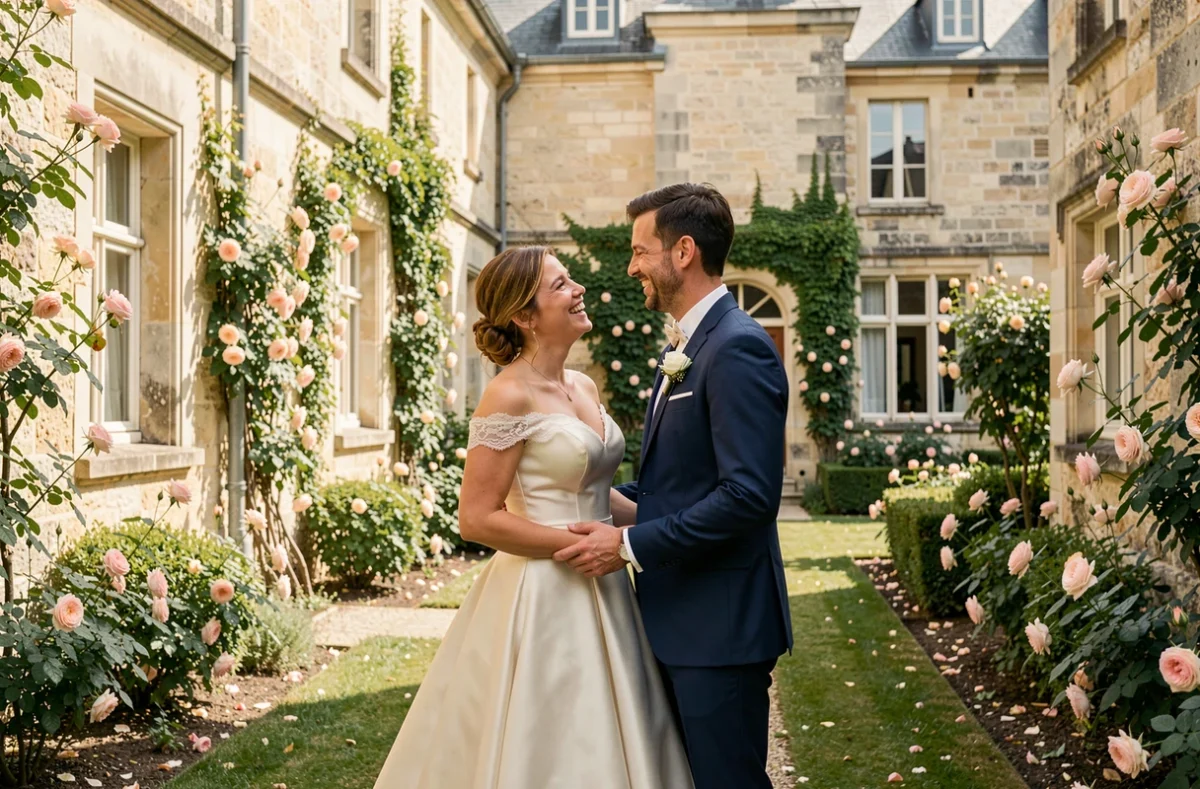
A couple who books a dream venue without checking the width of the doors or the slope of the access path may find themselves looking for temporary ramps three months before the big day. Wedding planning often starts with aesthetics, even though the venue’s physical constraints affect everything else: the seating plan, the day’s schedule and guest transportation.
The banns must be published for ten days before the civil ceremony, and the town hall may require specific documents depending on the couple’s circumstances. It’s therefore best to sort out the paperwork before signing anything with a vendor.
Reception venue accessibility: what to check before signing
Venues open to the public must comply with regulations covering outdoor paths, building access, indoor circulation, restrooms and facilities. On paper, a venue may describe itself as “accessible.” In practice, check for yourself.
Before your visit, make a list of guests with specific needs: wheelchair users, people who use walkers, guests with low vision or sensory sensitivities. Each person has different needs. A wheelchair user needs level surfaces and doorways at least 80 cm wide. An autistic or sensory-sensitive guest may need a quiet space away from the sound system.
During your visit, walk the entire route: parking lot, entrance, ceremony space, cocktail area, reception room and restrooms. Time the distance between each area. If it takes a wheelchair user more than five minutes to reach the restroom from their table, the venue presents a practical problem.
- Check for accessible parking spaces close to the entrance, not at the far end of a field.
- Look out for thresholds, isolated steps and gravel paths that can stop wheels or throw off someone using a cane.
- Find out whether there is an enclosed room that can serve as a sensory retreat, away from the speakers and dance floor.
- Ask whether the venue can provide extra seating in areas where guests will be standing during the cocktail hour.
You can find resources and firsthand accounts at https://www.univers-mariage.net, including advice on weighing venue selection criteria against the practical realities of the big day.
Think about transportation, too. If the venue is remote, arrange an accessible shuttle or confirm that your transportation provider has an accessible vehicle. A beautiful but inaccessible venue excludes loved ones from your special day.

Wedding planning timeline: deadlines that shape everything
Most guides recommend starting twelve months in advance. That’s the bare minimum, not a comfortable lead time. The real starting point is contacting the town hall.
The town hall will check which documents you need based on your circumstances (nationality, marital property regime, place of residence) and set the ceremony date with you. Depending on the municipality, civil ceremony slots can fill up several months in advance. If you’re hoping for a Saturday between May and September, you may need to book even earlier.
Once the civil ceremony date is set, make your other bookings in this order:
- Reception venue, top priority: it’s the most limited option and often the most expensive.
- Caterer, photographer and DJ or band: these vendors have a limited number of dates available each season.
- Dress, suit and wedding rings: alterations and custom orders take several weeks.
- Stationery (invitations, menus, seating plan): start once the venue and guest count are confirmed.
Consider an autumn wedding for more flexibility
Professionals interviewed by TF1 report an increase in inquiries and bookings in the fall. Venues may be easier to secure, and prices are often lower than during peak season. For couples hoping to book a highly sought-after venue without waiting eighteen months, moving the date to October or November can make a big difference to both the budget and availability.
Wedding budget: balancing fixed and variable costs
A budget isn’t managed like a shopping list. Separate fixed costs (venue, catering, officiant) from variable ones (decor, guest favors, entertainment). Fixed costs make up most of the spending and are difficult to negotiate once the contract is signed.
Set a total budget before looking for vendors. Divide it into an allowance for each category, leaving a few percent for unexpected expenses. If the caterer’s quote exceeds the allowance, cut back elsewhere rather than increasing the total.
One often-overlooked point: ask the caterer and venue how they handle food waste sorting. Since January 1, 2024, all producers have been required to sort food waste at the source. Asking the question helps you find out whether the vendor is compliant and avoid extra cleaning or sorting fees.
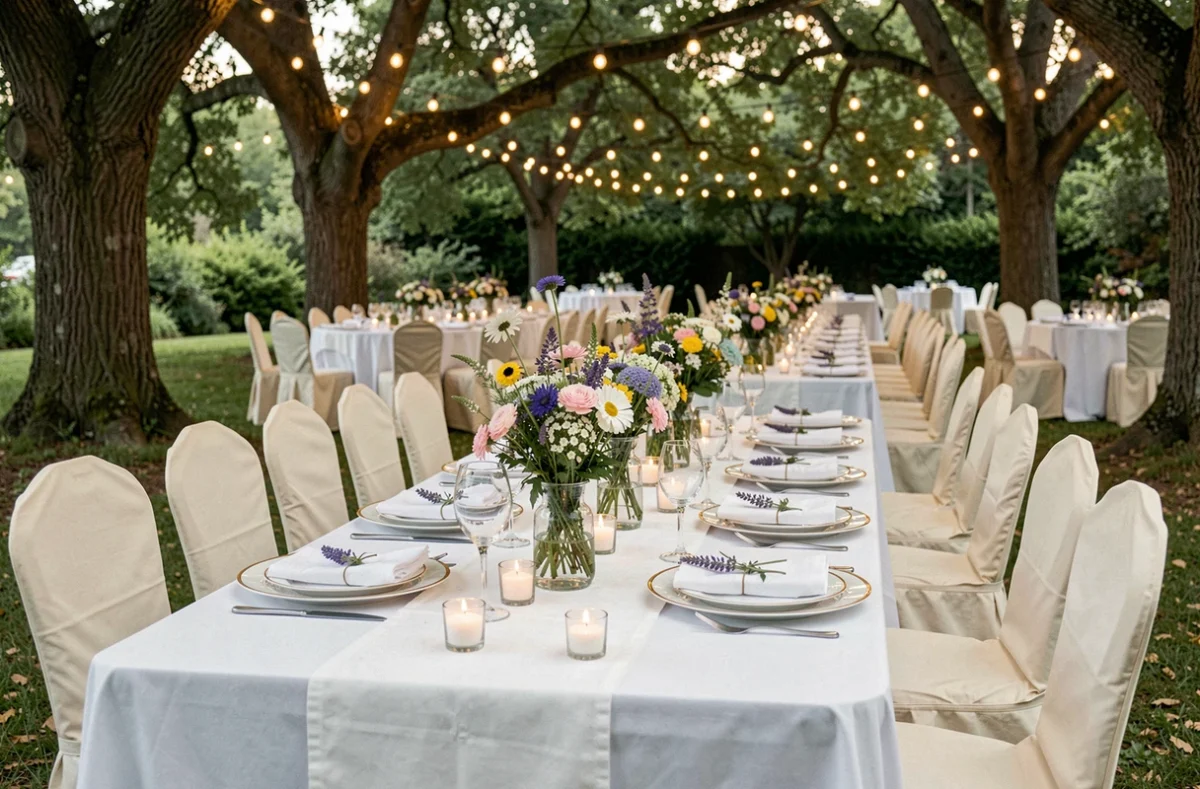
Wedding atmosphere and schedule: create structure without making it rigid
A minute-by-minute schedule may look reassuring on paper, but it can disrupt the natural flow of a celebration. A better approach is to plan in blocks: ceremony, cocktail hour, meal and dancing, with some buffer time between each.
These breaks benefit everyone. Guests with limited mobility can get around without feeling rushed. Children can burn off some energy. Smokers can step outside. The photographer can capture spontaneous moments instead of sticking to a timed shot list.
For the decor and theme, start with what the venue already offers. A venue with exposed stone walls doesn’t need heavy tablecloths. A bright room doesn’t need string lights. The fewer extra elements you add, the quicker setup and teardown will be, which also helps keep costs down.
Speeches and entertainment: pace the highlights
Two or three well-timed speeches (between courses, not during dessert) are enough. Any more and guests may lose interest. Let speakers know how much time they have, and offer them a stand microphone rather than a handheld one, which is easier for the sound team to manage.
Guest lists, wedding dress choices and favors are easier to decide once the logistics are in place. A well-planned wedding leaves room for emotion on the day itself, without last-minute scrambling or any guest being left out.